

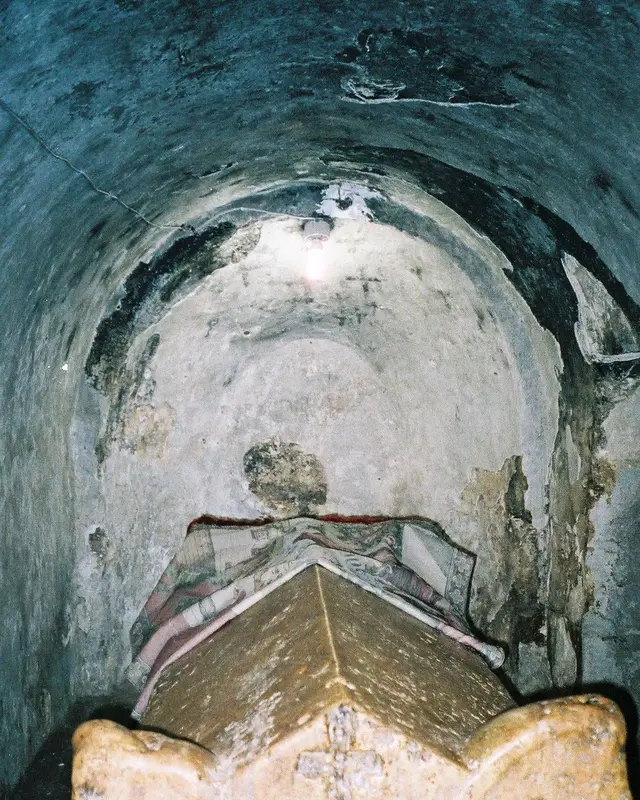
Saint Jacob of Nisibis
Bishop of Nisibis, spiritual father of Ephrem, present during the Persian siege
- Rank
- Saint
- Kind
- Bishop
- Life
- d. ~338
- Era
- 4th century
- Feast
- 15 July
- Countries
- Türkiye
Life story
Jacob was born in Nisibis (modern Nusaybin, Turkey) in the third century. According to Theodoret of Cyrrhus, the main source about him, he lived as a hermit in the mountains near Nisibis around 280. The date of his consecration as bishop is uncertain; estimates include about 300, or 308 according to Elijah of Nisibis.
He is said to have attended the Council of Nicaea in 325 and opposed Arius. The story that Ephrem accompanied him is considered doubtful. Even so, Ephrem is described as his spiritual son, and Jacob has been called the Moses of Mesopotamia.
According to Theodoret, during the siege of Nisibis by the Persian king Shapur II around 337 or 338, he prayed for the city and cursed the besiegers. Some sources say he defended it again in 350. Many wonders are told of him, such as finding a fragment of Noah's Ark on Mount Qardu or the miracles recorded by Theodoret; these are legends, not established history.
His death is dated either to 337/338 or to 350. Tradition holds that he was buried within the walls of Nisibis. Homilies once attributed to him are now thought to be by Aphraates.
Works and witness
- Lived as a hermit in the mountains near Nisibis around 280
- Bishop of Nisibis, said to have attended Nicaea in 325
- According to Theodoret, prayed for the city during the Persian siege
- Remembered as the spiritual father of Ephrem
Saints from the same country
References
- Theodoret of Cyrrhus, Historia Religiosa (Life of Jacob), as discussed in OrthodoxWiki, "Jacob of Nisibis"
- Smith & Wace, Dictionary of Christian Biography, "Jacobus, bp. of Nisibis"
Written by Anawim from documented history. Some details about ancient saints rest on tradition and are marked as such.