

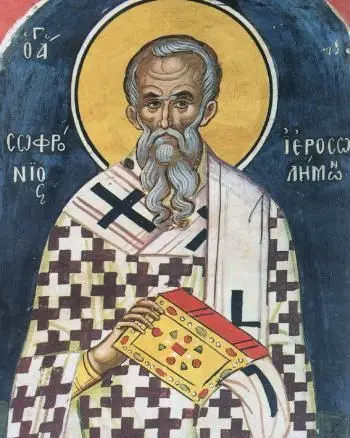
Saint Sophronius of Jerusalem
Patriarch of Jerusalem who opposed Monoenergism and negotiated the city's surrender in 637–638
- Rank
- Saint
- Kind
- Bishop
- Life
- d. 638
- Era
- 7th century
- Feast
- 11 March
- Countries
- Syria, Palestinian Territories
Life story
He was born around 560 in Damascus, then part of the Byzantine Empire. Around 580 he became an ascetic in Egypt and then entered the Monastery of Saint Theodosius near Bethlehem. His companion was John Moschus; when Moschus died in Rome in 619, Sophronius carried his body back to Jerusalem for burial.
In 633 he travelled to Alexandria and Constantinople to urge the patriarchs to reject Monoenergism. The mission failed. In 634 he was elected Patriarch of Jerusalem. In his Christmas sermon that year he warned the clergy about Muslim expansion, noting that Bethlehem was already under their control.
In 637 or 638 he negotiated the surrender of the city to Caliph Umar. The result was the document known as “Umar's Assurance”, which guaranteed Christians civil and religious liberty in exchange for tribute. He died in Jerusalem on 11 March 638; he was probably worn down by the fall of the city, and a late tradition that he was beheaded by Amr ibn al-As is considered legendary.
Works and witness
- Became an ascetic in Egypt, then a monk near Bethlehem
- Carried John Moschus's body from Rome to Jerusalem in 619
- Travelled to Alexandria and Constantinople against Monoenergism in 633
- Patriarch of Jerusalem from 634
- Negotiated Jerusalem's surrender to Caliph Umar in 637–638
Saints from the same country
References
- Britannica, "Sophronius"
- Vatican State, "March 11: Saint Sophronius of Jerusalem, Patriarch" (vaticanstate.va)
- Greek Orthodox Archdiocese of America, "Sophronios, Patriarch of Jerusalem"
Written by Anawim from documented history. Some details about ancient saints rest on tradition and are marked as such.