

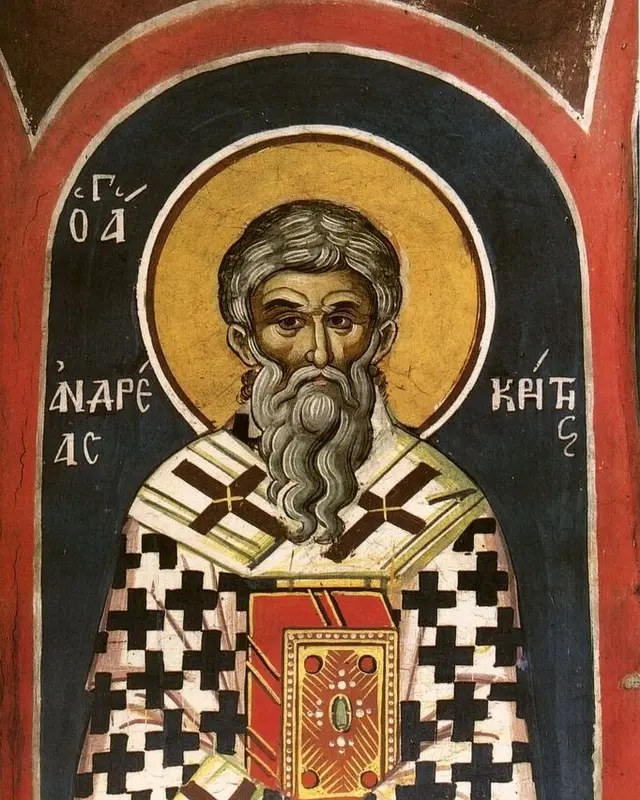
Saint Andrew of Crete
Archbishop of Gortyna in Crete and author of the Great Canon sung in Lent
- Rank
- Saint
- Kind
- Bishop
- Life
- d. 740
- Era
- 8th century
- Feast
- 4 July
- Countries
- Syria, Greece
Life story
He was born around 660 in Damascus to Christian parents. At fourteen he entered the Lavra of Saint Sabbas near Jerusalem to begin monastic life. Theodore, the locum tenens of the Patriarchate of Jerusalem, sent him to Constantinople; sources link this mission to the Sixth Ecumenical Council (680–681) or place it around 685.
He became a deacon at the Great Church (Hagia Sophia) in Constantinople, and later was appointed archbishop of Gortyna on Crete (sources date this between about 692 and 710). He composed many hymns, the best known being the Great Canon of 250 strophes, regarded as the longest canon ever composed. It is chanted during Great Lent: in four parts on the first four nights, and in full on the Thursday of the fifth week.
He died on the island of Lesbos while returning to Crete from Constantinople. The date is 4 July, but the year is uncertain: the Catholic Encyclopedia gives 740 (or 720), and other sources give 712 or 726. Because the year of his death is uncertain, the dates of his life are approximate. The Great Canon is still chanted in the Byzantine liturgy each Lent.
Works and witness
- Entered the Lavra of Saint Sabbas at fourteen
- Sent to Constantinople by Theodore, locum tenens of Jerusalem
- Served as deacon at Hagia Sophia, Constantinople
- Became archbishop of Gortyna on Crete
- Composed the Great Canon of 250 strophes
Saints from the same country
References
- Catholic Encyclopedia (1913), "St. Andrew of Crete" (newadvent.org/cathen/01473b.htm)
- Orthodox synaxarion notes on Andrew of Crete (johnsanidopoulos.com)
Written by Anawim from documented history. Some details about ancient saints rest on tradition and are marked as such.