

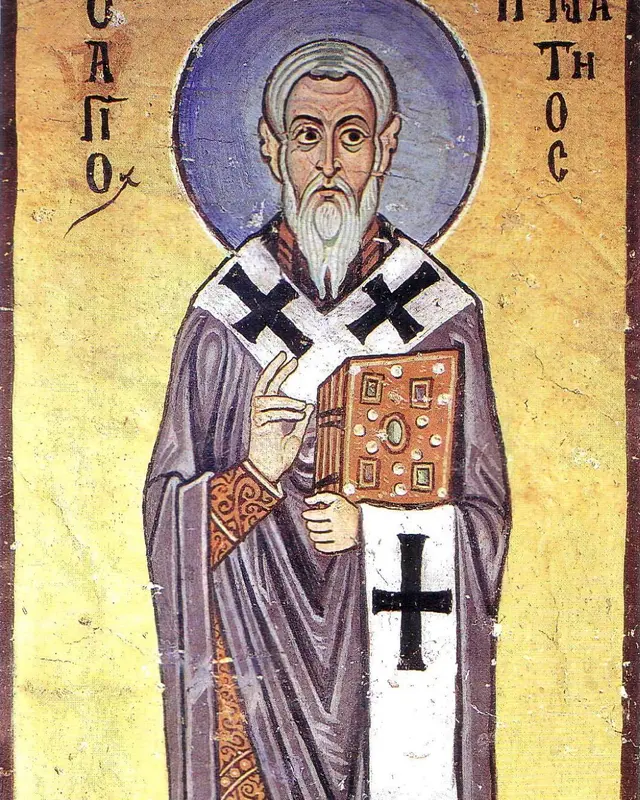
Saint Ignatius of Antioch
Bishop of Antioch who wrote seven letters on the road to execution in Rome
- Rank
- Saint
- Kind
- Bishop, Martyr
- Life
- d. ~107
- Era
- 2nd century
- Feast
- 17 October
- Countries
- Syria, Italy
Life story
Ignatius was bishop of the Church of Antioch in Syria in the late first and early second century. Eusebius says he was the second or third successor of Peter in that city. He also called himself Theophoros, meaning God-bearer. Apart from this, almost nothing is known about his life before his arrest.
Under the emperor Trajan he was arrested and taken overland to Rome to be executed. Along the way he was welcomed by Christian communities in Asia Minor, and from Smyrna and Troas he wrote seven letters to the Churches of Ephesus, Magnesia, Tralles, Rome, Philadelphia and Smyrna, and to Bishop Polycarp. The letters speak at length of the bishop's office, of unity, and of his expectation of death.
According to tradition he was killed by wild beasts in Rome around the year 107, though some historians date it a little later, to about 110. His letters are among the most important Christian writings of the age after the apostles. His letter to the Romans is early evidence of how he regarded the standing of the Church there. In the West, his feast is kept on 17 October. Polycarp of Smyrna collected the letters and later passed copies to other Churches, and this is part of how they survived. Their authenticity was confirmed by scholars in the seventeenth century, after long debate over which versions were genuine. Several other letters once attributed to him are now recognised as later forgeries.
Works and witness
- Bishop of Antioch in the late first and early second century
- Taken under guard to Rome under the emperor Trajan
- Wrote seven letters on the way, preserved by the Church Fathers
- Called himself Theophoros, meaning God-bearer
- According to tradition, martyred by wild beasts in Rome around 107
Saints from the same country
References
- Ignatius of Antioch, Seven Letters (Bảy thư của Inhaxiô)
- Eusebius, Church History
- Martyrologium Romanum
Written by Anawim from documented history. Some details about ancient saints rest on tradition and are marked as such.