

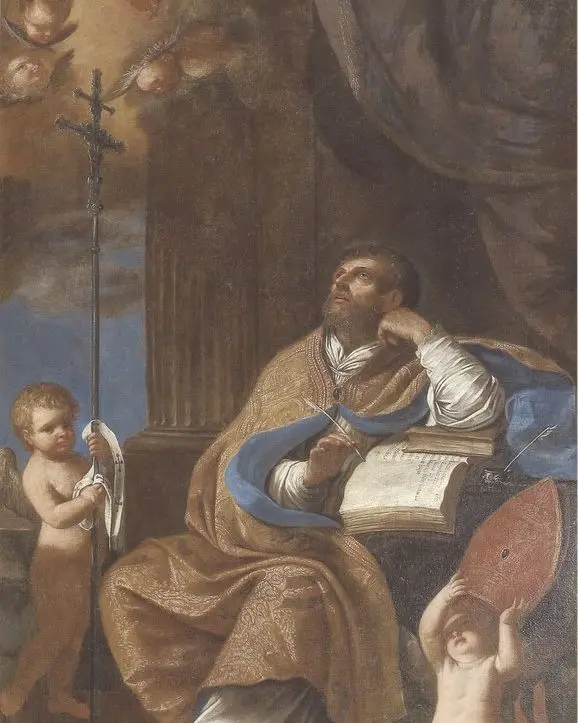
Saint Peter Chrysologus
Fifth-century archbishop of Ravenna, called the “Doctor of Homilies”
- Rank
- Saint
- Kind
- Doctor of the Church, Bishop
- Life
- ~380 – 450
- Era
- 5th century
- Feast
- 30 July
- Countries
- Italy
Life story
Peter was born around 380 in Imola in northern Italy, trained under the local bishop Cornelius, and became a deacon. According to tradition, around 433, when Ravenna needed a new bishop, Pope Sixtus III chose him after a vision, a detail that belongs to tradition rather than independent evidence. Ravenna was then the capital of the Western Roman Empire.
He preached often, and briefly. About 176 of his sermons survive, collected by Archbishop Felix in the early eighth century. They deal with parables, the Lord's Prayer and the Creed, and urge ordinary believers to live their faith daily. The name Chrysologus, meaning “golden-worded”, was traditionally given to him by the empress Galla Placidia, but it appears only in later sources.
In 448 a synod in Constantinople condemned the monk Eutyches. He wrote to Peter, and Peter replied, urging him to accept the decision and to obey the bishop of Rome. He died around 450, traditionally on 31 July, during a visit to Imola. Pope Benedict XIII declared him a Doctor of the Church in 1729. Since 1969 his feast day has been 30 July; before that it was 4 December.
Works and witness
- Archbishop of Ravenna from about 433
- Left about 176 sermons
- Wrote to the monk Eutyches urging him to accept the decision of 448
- Declared a Doctor of the Church in 1729
- Feast moved to 30 July in 1969
Saints from the same country
References
- Peter Chrysologus, Selected Sermons, trans. George E. Ganss (Fathers of the Church 17, 1953)
- Martyrologium Romanum (30 July)
- Decree of Pope Benedict XIII declaring Peter Chrysologus a Doctor of the Church (1729)
Written by Anawim from documented history. Some details about ancient saints rest on tradition and are marked as such.