

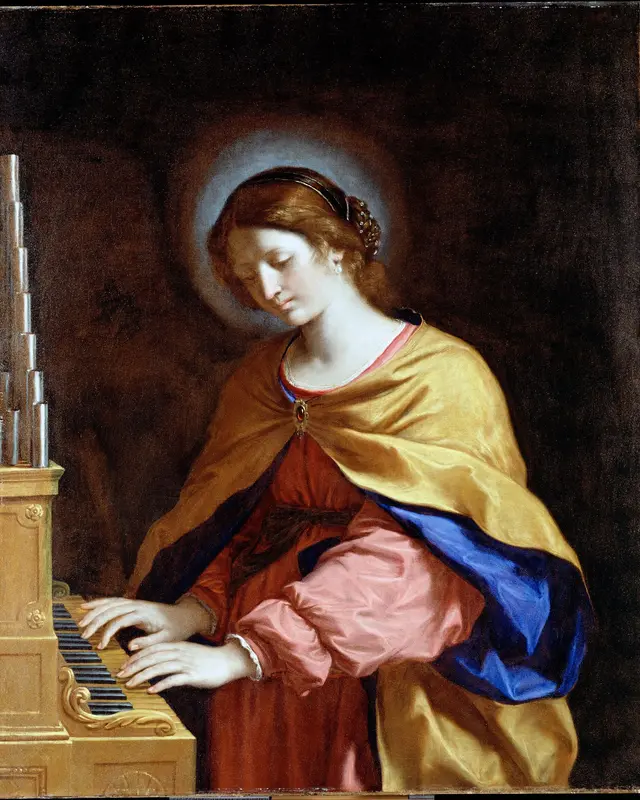
Saint Cecilia
Roman female martyr venerated since the fourth century, patron of musicians
- Rank
- Saint
- Kind
- Martyr, Virgin
- Life
- d. ~230
- Era
- 3rd century
- Feast
- 22 November
- Countries
- Italy
Life story
Cecilia was a female martyr of Rome. Veneration of her is very old: from at least the fourth century her name stood in the calendar of the Church of Rome, and she has her own church in the Trastevere district and a tomb in the catacomb of Callixtus on the Via Appia. These are the fairly secure historical facts about her.
Most of what is told of her life comes from a text written around the fifth or sixth century, usually called the Acts of Saint Cecilia, and is therefore only tradition. According to it, she was a young noblewoman of Rome married to a young man named Valerian, whom she brought to the faith together with his brother Tiburtius, and both men were martyred. In the end she too was arrested and executed, traditionally by beheading, but the exact time is not known.
Under Pope Paschal I, around 820, her body is said to have been found and moved to the church in Trastevere. Her link with musicians may come from a line in the text saying that she sang in her heart during the wedding celebration. This association spread widely from the Middle Ages, and in 1594 she was formally adopted as patron of sacred music. Her feast is kept on 22 November, and many choirs, music schools and festivals around the world carry her name. Many details remain debated, and historians are cautious about the story of her marriage.
Works and witness
- Roman female martyr venerated since at least the fourth century
- Has her own church in Trastevere and a tomb near the catacomb of Callixtus
- According to a late text, brought her husband and brother-in-law to the faith
- According to tradition, beheaded in Rome
- Her body is said to have been found around 820
Patron of
Musicians
Saints from the same country
References
- Martyrologium Romanum
- Passio Sanctae Caeciliae (Công vụ thánh nữ Xêxilia)
- Liber Pontificalis
Written by Anawim from documented history. Some details about ancient saints rest on tradition and are marked as such.