

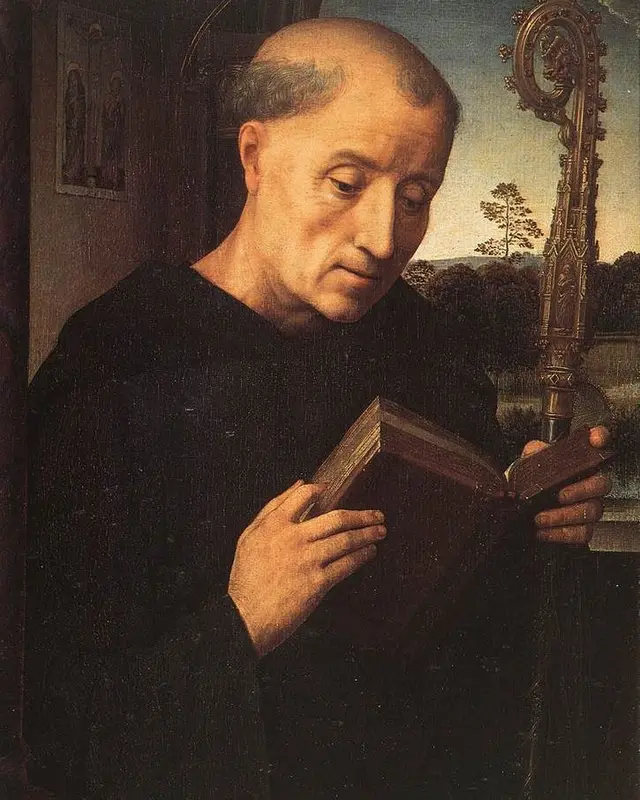
Saint Benedict of Nursia
Abbot of Monte Cassino and author of the Rule that shaped Western monasticism
- Rank
- Saint
- Kind
- Founder, Religious
- Life
- 480 – 547
- Era
- 6th century
- Feast
- 11 July
- Countries
- Italy
Life story
Benedict was born around 480 at Nursia in Umbria, Italy, into a family of standing. He went to Rome to study but soon grew disillusioned with life there and left. He lived hidden in a cave at Subiaco, east of Rome, for about three years. He is known chiefly through the second book of the Dialogues of Pope Gregory the Great, which tells his life on the strength of his disciples' reports.
Gradually many people sought him out. According to Gregory, he founded twelve small monasteries around Subiaco, each with twelve monks. Around 529 he moved on and established a monastery on the hill of Monte Cassino, between Rome and Naples, where he lived until the end of his life.
There he wrote the Rule, a practical guide to monastic life built on a rhythm of prayer, work and reading, under the authority of an abbot. It is brief, moderate in tone, and was gradually adopted by communities across Western Europe.
He died around 547 and was buried at Monte Cassino. In 1964 Pope Paul VI declared him patron of Europe. His feast is 11 July. Monte Cassino has been destroyed and rebuilt several times, including after the bombing of February 1944 in the Second World War. The Rule's balance of prayer and work shaped Benedictine houses across Europe, which preserved and copied many ancient manuscripts. The Rule is divided into seventy-three short chapters and remains in use in Benedictine communities today.
Works and witness
- Lived as a hermit for about three years in a cave at Subiaco
- Founded twelve small monasteries, then Monte Cassino around 529
- Wrote the Rule, a foundation of Western monastic life
- Declared patron of Europe in 1964
Patron of
Europe
Saints from the same country
References
- Gregory the Great, Dialogues (Book 2)
- Regula Benedicti
- Martyrologium Romanum
Written by Anawim from documented history. Some details about ancient saints rest on tradition and are marked as such.