

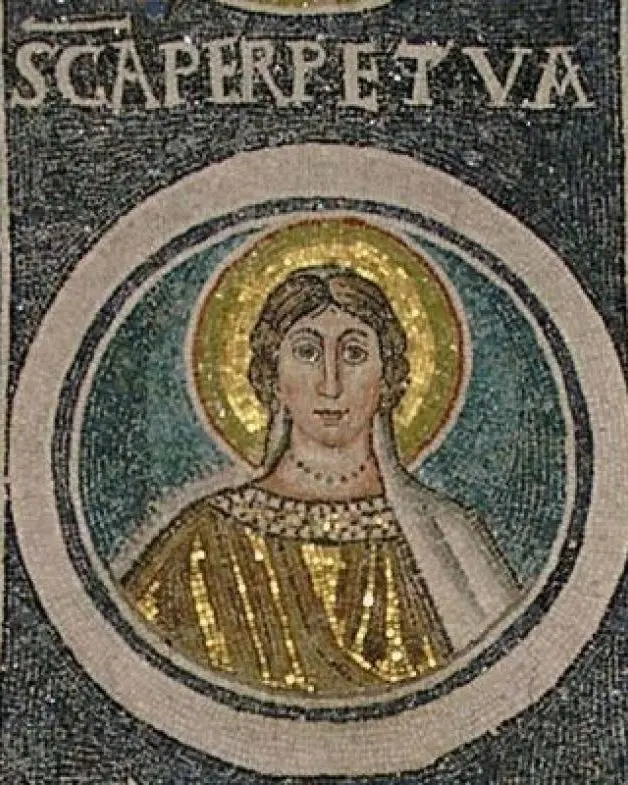
Saints Perpetua and Felicity
Two women of Carthage who died in the arena in the year 203
- Rank
- Saint
- Kind
- Martyr
- Life
- ~181 – ~203
- Era
- 3rd century
- Feast
- 7 March
- Countries
- Tunisia
Life story
Perpetua and Felicity lived in Carthage, the capital of the Roman province of Africa, in the early third century. Perpetua was about twenty-two, from an educated family, married, and nursing a baby son. Felicity was an enslaved woman who was pregnant when she was arrested. Both were catechumens, preparing for baptism, when they were seized with several companions, among them Saturus, Revocatus, Saturninus and Secundulus, under the emperor Septimius Severus.
Much of what is known comes from the Passio Perpetuae et Felicitatis. It includes a prison diary that tradition ascribes to Perpetua herself, recording her interviews with her pagan father and her worry for her infant son. Felicity gave birth to a daughter in prison before the trial; according to the text, a woman of the community adopted the child. A later editor added an account of the final days.
The prisoners were brought into the amphitheatre during a festival honouring the imperial family, attacked by wild animals, and finally struck down by gladiators with the sword. The account says that Perpetua guided the shaking hand of the young swordsman to her own throat. The event took place in 203.
Both women appear in the ancient Roman Canon of the Mass and are commemorated together on 7 March. The Passio is among the oldest surviving Latin Christian texts and one of very few early documents partly written by a woman, which gives it great value for historians.
Works and witness
- Arrested with a group of catechumens at Carthage in 203 under Septimius Severus
- Perpetua left a prison diary, among the oldest texts attributed to a woman
- Felicity gave birth to a daughter in prison shortly before the execution
- Executed in the Carthage amphitheatre; both are named in the Roman Canon of the Mass
Saints from the same country
References
- Passio sanctarum Perpetuae et Felicitatis
- Martyrologium Romanum
- Dicastery for the Causes of Saints – biographical profile
Written by Anawim from documented history. Some details about ancient saints rest on tradition and are marked as such.