

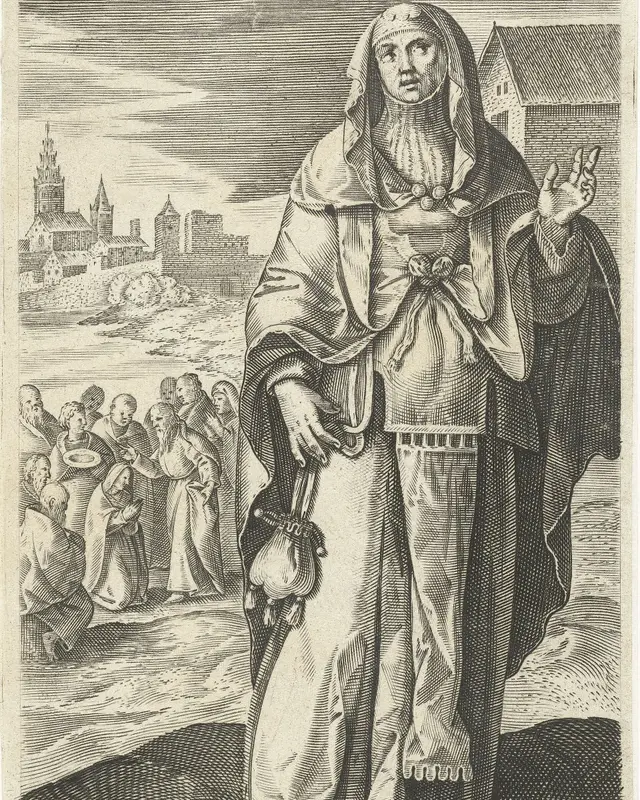
Saint Lydia of Thyatira
The purple-cloth dealer and first named believer in Philippi
- Rank
- Saint
- Kind
- Layperson, Biblical figure
- Feast
- 20 May
- Countries
- Türkiye, Greece
Life story
Lydia appears only in Acts 16, but the account is fairly detailed. She came from Thyatira, a city in Asia Minor, and traded in purple-dyed cloth, an expensive commodity. When Paul reached Philippi in Macedonia she was living there, and she is described as a worshipper of God: a non-Jew who revered the God of Israel.
On the sabbath, Paul and his companions went outside the city gate to a riverside where a group of women gathered to pray. Lydia was among them and listened to Paul. Acts says she accepted the message, was baptised along with her household, and then invited the men to stay at her home, insisting until they agreed. Later, after Paul and Silas were released from prison in Philippi, they returned to Lydia's house, met the believers there, and departed.
Beyond what Acts reports, very little is known. There is no reliable record of a husband or children, of how long she lived, or of where she died. Some scholars suggest that the name Lydia may have been a nickname referring to the region of Lydia, where Thyatira lay, but this is only a conjecture. Orthodox tradition honours her as equal to the apostles, and the Catholic calendar commemorates her on 20 May. The Philippian church later received a letter from Paul that is part of the New Testament, though it does not name Lydia.
Works and witness
- Purple-cloth dealer from Thyatira living in Philippi (Acts 16)
- Heard Paul preach by a river and was baptised with her household
- Invited Paul and his companions to stay in her home
- Her house was where Philippian believers met Paul and Silas after their release
- According to Acts, a believer at Philippi who offered hospitality to Paul
Saints from the same country
References
- New Testament – Acts of the Apostles
- New Testament – Letter to the Philippians
- Martyrologium Romanum
Written by Anawim from documented history. Some details about ancient saints rest on tradition and are marked as such.