

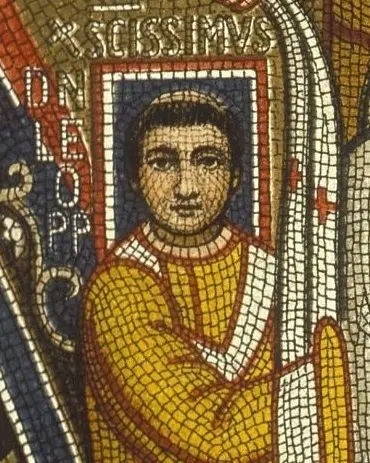
Pope Saint Leo III
The pope who crowned Charlemagne emperor on Christmas Day, 800
- Rank
- Saint
- Kind
- Pope
- Life
- 750 – 816
- Era
- 9th century
- Feast
- 12 June
- Countries
- Italy
Life story
Leo III was a Roman, the son of Atyuppius and Elizabeth; his birth year was not recorded, and writers usually place it around 750. Before becoming pope he was cardinal-priest of the church of St. Susanna. He was elected on 26 December 795, the day his predecessor Adrian I was buried, and consecrated the next day.
On 25 April 799, during the Greater Litanies procession near the Flaminian Gate, armed men attacked him, among them relatives of Adrian I. They knocked him down and tried to cut out his tongue and blind him. He was carried at night to the monastery of St. Erasmus on the Caelian Hill, and then travelled to Charlemagne at Paderborn, where he was received with honour. In 800 Charlemagne came to Rome; Leo swore an oath affirming his innocence of the charges against him, and at his request the death sentence on his chief enemies was commuted to exile.
On Christmas Day 800, in St. Peter's, he placed a crown on Charlemagne's head, reviving the title of emperor in the West. Charlemagne, acting in harmony with him, opposed Adoptionism, and Salzburg was made the metropolitan see for Bavaria. He used the gifts he received to help the poor and to renovate churches in Rome and Ravenna. He died in 816 and was buried in St. Peter's on 12 June; he was canonized in 1673.
Works and witness
- Elected on 26 December 795 and consecrated the next day
- Attacked on 25 April 799 and later protected by Charlemagne's envoys
- Crowned Charlemagne emperor on Christmas Day 800
- Acted in harmony with Charlemagne on Church matters such as Adoptionism and the see of Salzburg
- Used gifts received to aid the poor and restore churches in Rome and Ravenna
Saints from the same country
References
- New Advent, Catholic Encyclopedia (1910), 'Pope St. Leo III', newadvent.org/cathen/09157b.htm
Written by Anawim from documented history. Some details about ancient saints rest on tradition and are marked as such.