

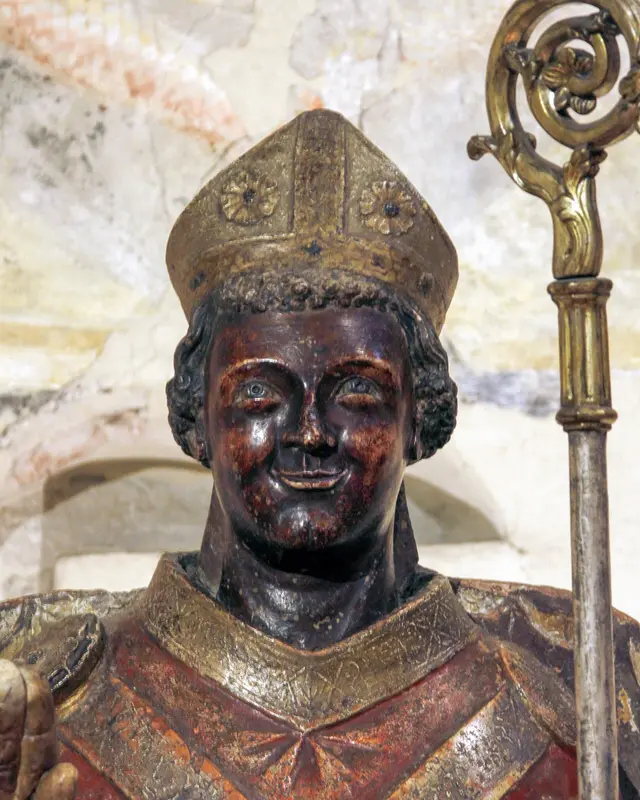
Saint Zeno of Verona
Fourth-century bishop of Verona whose short sermons survive
- Rank
- Saint
- Kind
- Bishop
- Feast
- 12 April
- Countries
- Italy
Life story
Almost everything reliable about Zeno comes from the sermons that bear his name. Their style and content lead scholars to think he was of African origin. He was bishop of Verona and is listed as the eighth in the city's line of bishops. The Catholic Encyclopedia says he governed the church of Verona from 362 to 380. Saint Ambrose mentions him as a bishop of holy memory.
His sermons became known only when two Dominicans printed them in Venice in 1508, from a manuscript found in the episcopal library of Verona about fifty years earlier. The Ballerini brothers republished them in 1739 with a long introduction. The Catholic Encyclopedia counts 105 sermons or tractatus attributed to him; twelve are judged to be by other authors, and many of the rest are only sketches or fragments. They deal with doctrine, liturgy and Christian living, show that pagan practice still held firm in Verona, especially in the countryside, and answer the Arians.
The Roman Martyrology places his feast on 12 April. The Roman Martyrology calls him a martyr under Gallienus, and Gregory the Great tells of a miracle at his church, but the Catholic Encyclopedia argues that he was more probably a confessor than a martyr. A medieval legend sets him in the reign of the emperor Gallienus, but that chronology is considered wrong. Verona still has a major church named after him, and many other churches carry his name.
Works and witness
- Eighth bishop of Verona, probably governing from about 362 to 380
- Left about a hundred short sermons, first printed in Venice in 1508
- Wrote on doctrine and liturgy and against paganism and Arianism
- Mentioned by Saint Ambrose as a bishop of holy memory
- The church of San Zeno in Verona and many others bear his name
Saints from the same country
References
- Catholic Encyclopedia, 'St. Zeno' (New Advent)
- Catholic Encyclopedia, 'Verona' (New Advent)
Written by Anawim from documented history. Some details about ancient saints rest on tradition and are marked as such.