

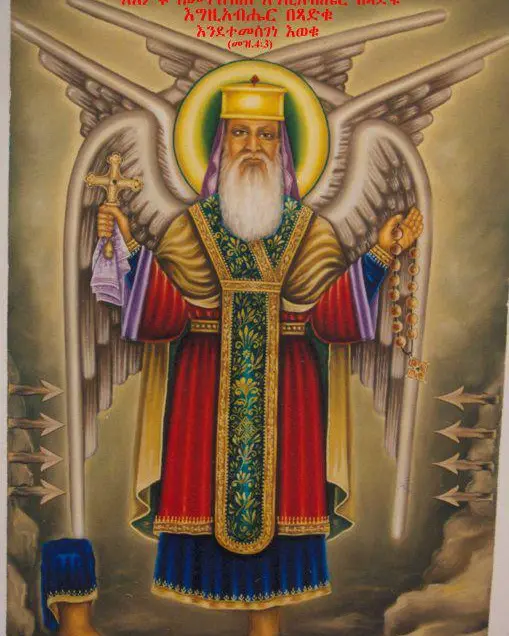
Saint Tekle Haymanot
Ethiopian hermit-monk and founder of Debre Libanos monastery
- Rank
- Saint
- Kind
- Religious, Founder
- Life
- 1215 – 1313
- Era
- 14th century
- Countries
- Ethiopia
Life story
Tekle Haymanot, a name meaning plant of faith, was born by tradition around 1215 in the Shewa region of central Ethiopia. His lives (gadla) were written from the early 15th century onward, about two centuries after him, so many details are legendary. Tradition says he became a deacon at fifteen and spent about nine years at Lake Hayq with the monk Iyasus Mo'a.
He returned to Shewa with disciples and lived as a hermit in a cave. In 1284 he founded the monastery of Debre Atsbo, which was renamed Debre Libanos in the 15th century. This part is fairly well attested, since Debre Libanos became one of Ethiopia's most important religious centres, and its abbot, titled Ichege, ranked second only to the Abuna.
Tradition tells many marvels about him, such as his standing in prayer until a leg broke, or being given wings. Some traditions say he helped Yekuno Amlak take the throne, but modern historians regard this as a later addition, since older sources credit Iyasus Mo'a.
By tradition he died in 1313 at Debre Libanos, though that date seems to be reckoned rather than directly recorded. His tomb is at Debre Libanos. He is venerated in the Ethiopian Orthodox Church, and Ethiopian tradition keeps his commemoration on the 24th of each month.
Works and witness
- Spent years with Iyasus Mo'a at Lake Hayq (tradition)
- Lived as a hermit in a cave in Shewa
- Founded Debre Atsbo in 1284, later called Debre Libanos
- Debre Libanos became a major religious centre of Ethiopia
- His tomb remains a pilgrimage site at Debre Libanos
Saints from the same country
References
- Comboni Missionaries Ireland: 'The Monastery of Debre Libanos' (combonimissionaries.ie, 2019)
- Ethiopian Orthodox Tewahedo Church Mahibere Kidusan: 'Abune Tekle Haymanot' (eotcmk.org)
Written by Anawim from documented history. Some details about ancient saints rest on tradition and are marked as such.