

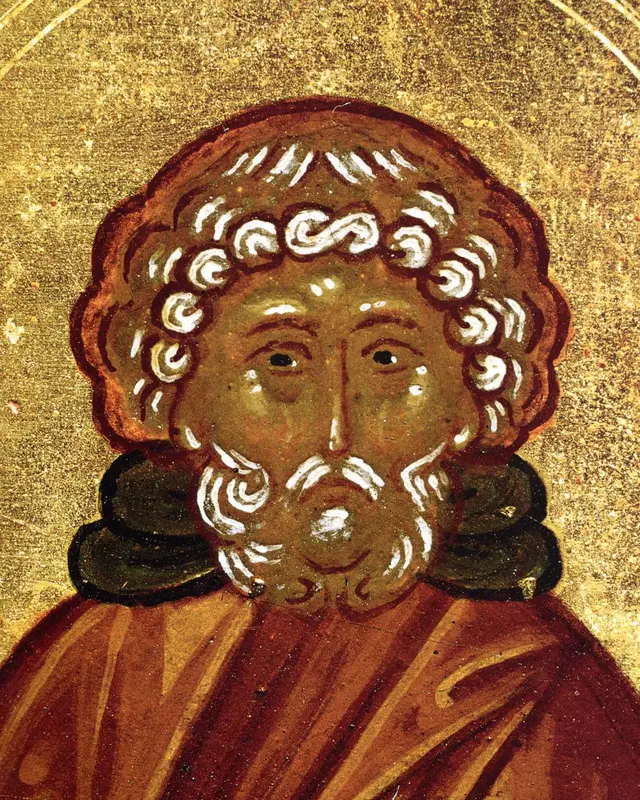
Saint Moses the Black
A former robber chief who became one of the best-known monks of the Egyptian desert
- Rank
- Saint
- Kind
- Religious
- Life
- ~330 – 405
- Era
- 5th century
- Feast
- 28 August
- Countries
- Ethiopia, Egypt
Life story
According to early traditions, Moses was born around 330, of Ethiopian or Nubian origin, and served as a slave to an official in Egypt. His master dismissed him over suspicions of theft and violence. He then became the leader of a band of robbers. Early sources describe him as tall and unusually strong.
At some point he abandoned that life and went to live among the monks of the desert of Scetis, now Wadi El Natrun in Egypt. Accounts of his life come mainly from the Lausiac History of Palladius and from the collected Sayings of the Desert Fathers. He passed difficult years learning to restrain his temper and live in solitude, and he eventually gained authority among the monks. He was ordained a priest.
According to tradition, around 405 he and about seven other monks were killed in a raid by nomadic attackers at Scetis. This detail rests on tradition, with no independent evidence to check it. The Catholic Church and several Eastern Churches commemorate him, with the Catholic feast on 28 August. He is often cited as one of the best-known desert monks, and as one of the saints of African origin.
Short sayings attributed to him are preserved in the Sayings of the Desert Fathers, many of them about patience in solitude and gentleness with others. Relics said to be his are kept at the monastery of Deir el-Baramous in Wadi El Natrun, according to Coptic tradition.
Works and witness
- Slave in Egypt, then leader of a robber band
- Entered monastic life at Scetis and was ordained a priest
- Recorded in Palladius' Lausiac History
- According to tradition, killed with companions around 405
Saints from the same country
References
- Martyrologium Romanum
- Palladius, Lausiac History
- Apophthegmata Patrum (Sayings of the Desert Fathers)
Written by Anawim from documented history. Some details about ancient saints rest on tradition and are marked as such.