

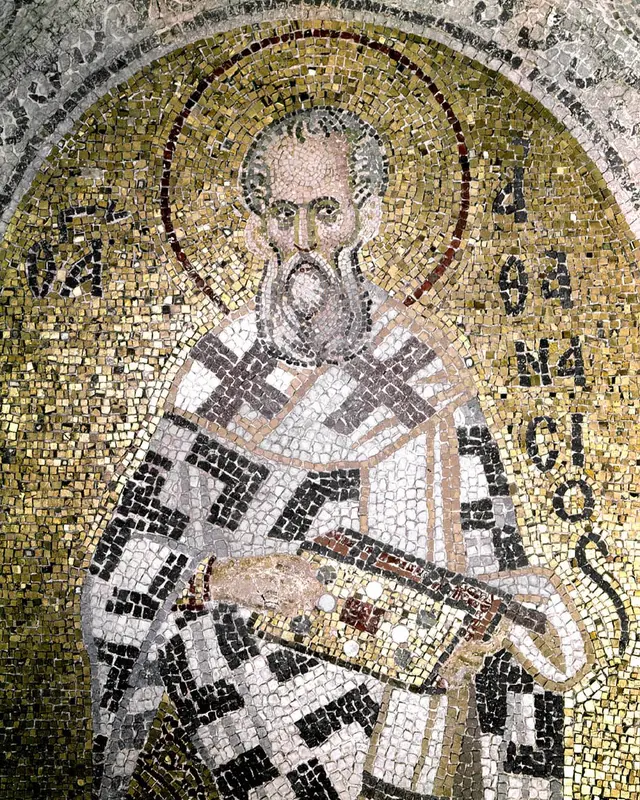
Saint Athanasius
Bishop of Alexandria, exiled five times for resisting Arianism
- Rank
- Saint
- Kind
- Bishop, Doctor of the Church
- Life
- ~296 – ~373
- Era
- 4th century
- Feast
- 2 May
- Countries
- Egypt
Life story
Athanasius was born around 296 in Alexandria, the great Egyptian city of the Roman world, and was educated in Greek culture while living close to Bishop Alexander. In 325 he accompanied that bishop to the Council of Nicaea as a young deacon, where the teaching of Arius was debated. In 328 he was chosen bishop of Alexandria.
The dispute over Arius then dragged on for decades and became entangled with politics. Athanasius was sent into exile by successive emperors and by rival bishops, five times by the usual count and about seventeen years in total, to places including Trier in Gaul, Rome, and the Egyptian desert. Between these periods he always returned to his see when circumstances changed.
He wrote extensively: Against the Arians, On the Incarnation of the Word, the Life of Antony, and pastoral letters. In his Easter letter of 367 he listed the twenty-seven books of the New Testament, the same list used today.
He died in Alexandria on 2 May 373. The Catholic Church has honoured him as a Doctor of the Church since 1568. His writing shaped later teaching on the divinity of Christ, and his life shows how closely Church disputes of the period were bound up with imperial politics. Monks of the Egyptian desert sheltered him during some of his exiles, and his Life of Antony, written around 357, helped spread the monastic ideal to the West.
Works and witness
- Attended Nicaea in 325 as a deacon; became bishop of Alexandria in 328
- Exiled five times, about seventeen years in all
- Wrote On the Incarnation of the Word and the Life of Antony
- His Easter letter of 367 lists the twenty-seven New Testament books
Saints from the same country
References
- Athanasius, Orations against the Arians
- Athanasius, On the Incarnation
- Martyrologium Romanum
Written by Anawim from documented history. Some details about ancient saints rest on tradition and are marked as such.