

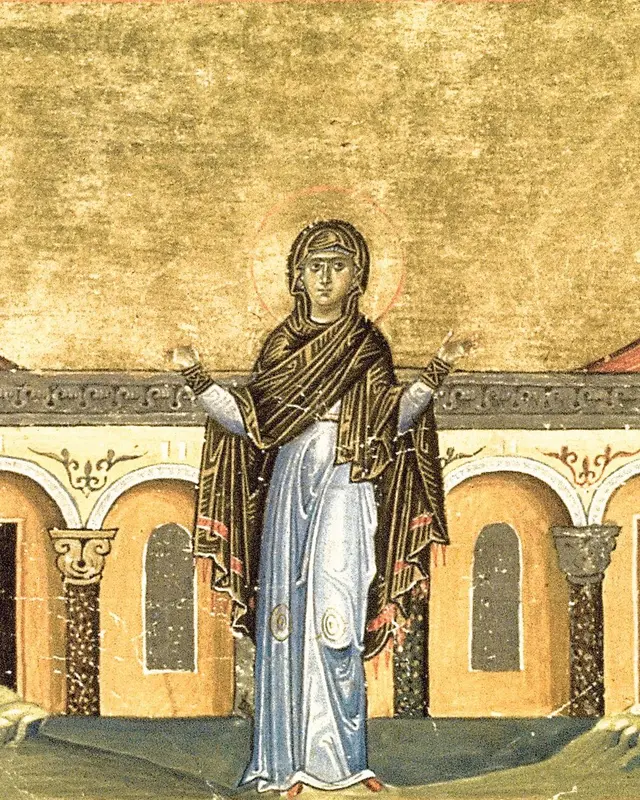
Saint Syncletica of Alexandria
Alexandrian ascetic who taught the spiritual life to young women in the desert
- Rank
- Saint
- Kind
- Virgin, Mystic
- Feast
- 5 January
- Countries
- Egypt
Life story
Very little is firmly known about Syncletica. The main sources are the Greek Life of Syncletica, traditionally attributed to Athanasius of Alexandria, and some 27 or 28 of her sayings in the Sayings of the Desert Fathers. Scholars date the Life to after about 450, so it cannot be by Athanasius (who died in 373), and its author is unknown.
According to the Life, she came from a noble, wealthy family; some accounts say she was born in Macedonia, but this is not firmly established. She had a blind sister and two brothers who died young. After her parents died she cut her hair, gave her wealth to the poor, and lived in a cell outside Alexandria with her sister, despite objections from relatives.
Her reputation drew young women who asked for her guidance, and she lived near them in the desert. The Life says she suffered an illness lasting about three years before she died. Sources give her age at death as 80, 83 or 84.
Her dates are not known with certainty: some modern sources estimate about 320 to 400. Because the Life contains few verifiable details, some scholars think it is mainly monastic teaching in biographical form, and even her name may not be her real one. The Catholic Church keeps her feast on 5 January.
Works and witness
- Gave away her wealth and lived as an ascetic near Alexandria
- Guided young women who sought the monastic life
- Some 27 or 28 of her sayings are preserved in the desert fathers literature
- Endured a long illness of about three years before her death
Saints from the same country
References
- Life of Syncletica (Greek, pseudonymously attributed to Athanasius; dated after c. 450)
- Sayings of the Desert Fathers (Apophthegmata Patrum), Syncletica collection
- Orthodox synaxarion notes on Syncletica (johnsanidopoulos.com)
Written by Anawim from documented history. Some details about ancient saints rest on tradition and are marked as such.