

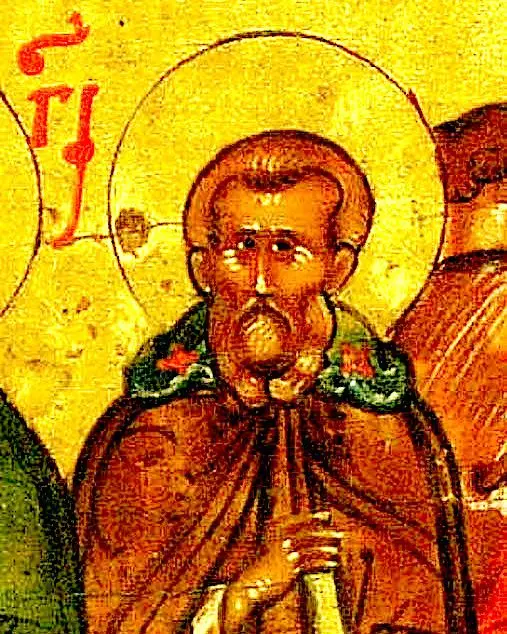
Saint Stephen the Sabaite
Mar Saba monk and nephew of John of Damascus who spent nearly fifty years there
- Rank
- Saint
- Kind
- Religious, Mystic
- Life
- b. 725
- Era
- 8th century
- Feast
- 13 July
- Countries
- Syria, Israel
Life story
Stephen was born in 725. The sources say he was a nephew of John of Damascus, who introduced him to monastic life. At the age of ten he entered the monastery of Saint Sabas, Mar Saba, in Palestine and was tonsured a monk there. Orthodox biographies say he spent almost his whole life at the monastery, occasionally going out into the desert to live in solitude.
Catholic sources report that by the age of twenty-four he held several roles serving the community, including guest master. He then asked to live as a hermit. His abbot allowed him to live alone on weekdays on condition that he counsel visitors at weekends; he posted a note on his cell door asking not to be disturbed except on Saturdays and Sundays. His biographer describes him as ready to help anyone who came.
His Life was compiled by his disciple Leontius. Orthodox tradition also credits him with wonderworking and the ability to read hearts, but these are accounts from a saint's life. He died in 794 after foretelling the day of his death. The Orthodox Church keeps his feast on 13 July; Catholic sources list 31 March, and another Stephen of Mar Saba is commemorated on 28 October, so care is needed to keep the different figures apart.
Works and witness
- Entered the Mar Saba monastery at ten, guided by his relative John of Damascus
- Served the community, including as guest master
- Asked to live as a hermit, receiving visitors only at weekends
- His Life was written by his disciple Leontius
- Died around 794
Saints from the same country
References
- OrthoChristian, Venerable Stephen of St Sava Monastery (orthochristian.com/105319.html)
- Catholic Ireland, St Stephen of Mar Saba (725-794) (catholicireland.net)
- Wikipedia, Stephen the Sabaite (used only to flag the merged hymnographer, whose dates 796/807 and feast differ)
Written by Anawim from documented history. Some details about ancient saints rest on tradition and are marked as such.