

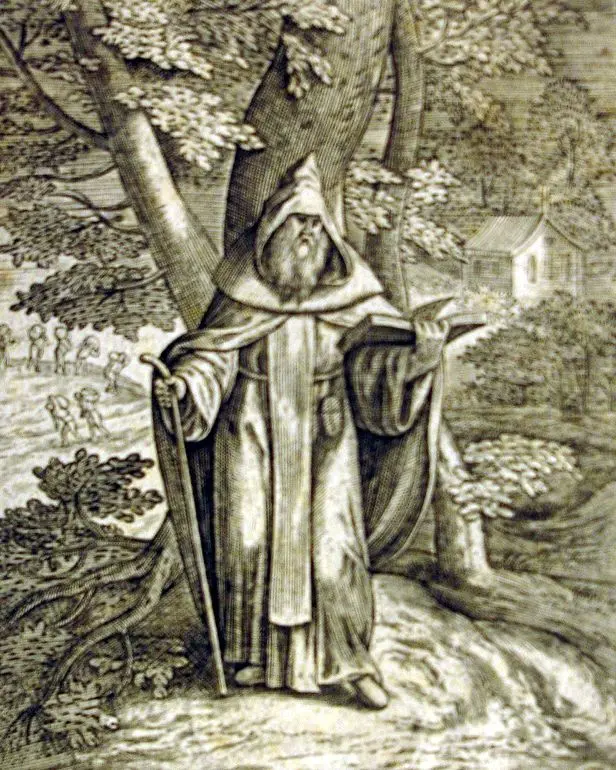
Saint Paphnutius of Thebes
Bishop and confessor tied to the Nicaea debate on clerical celibacy
- Rank
- Saint
- Kind
- Bishop
- Feast
- 11 September
- Countries
- Egypt
Life story
Little about Paphnutius is certain. The sources say he was bishop of a city in the Upper Thebaid in Egypt in the early fourth century; the name of his see was not recorded. Tradition makes him a disciple of Anthony the Great. The principal early source for him is the church historian Socrates Scholasticus, who wrote decades later.
According to the Catholic Encyclopedia, which draws on Socrates and Sozomen, under the emperor Maximinus (about 308 to 313) he was hamstrung on the left side, lost his right eye and was sentenced to the mines. For this he is honoured as a confessor. The emperor Constantine is said to have held him in high esteem and often sent for him.
The best-known story about him concerns the Council of Nicaea in 325. Socrates reports that when the bishops discussed requiring married clergy to separate from their wives, he stood up against it and proposed that only those who were celibate at ordination should remain so; the council left the matter to married clergy to decide. However, Eusebius does not mention this, and some modern scholars doubt that he attended the council, or even that he existed. The sources also place him at the Synod of Tyre in 335. His feast is kept on 11 September.
Works and witness
- Bishop in the Upper Thebaid, Egypt, in the early fourth century
- According to the Catholic Encyclopedia, hamstrung and blinded in one eye under Maximinus
- Sentenced to the mines, hence honoured as a confessor
- According to Socrates, spoke at Nicaea against forcing married clergy to separate
- Placed at the Synod of Tyre in 335 by the sources
Saints from the same country
References
- Catholic Encyclopedia (New Advent): 'Paphnutius'
- Socrates Scholasticus, Church History I.11 (via New Advent, as cited)
- Wikipedia article on Paphnutius of Thebes (read in full; modern doubts, feast 11 September)
Written by Anawim from documented history. Some details about ancient saints rest on tradition and are marked as such.