

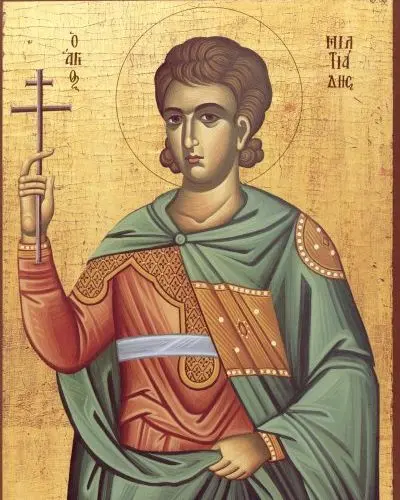
Pope Saint Miltiades
African-born pope at the end of the persecutions
- Rank
- Saint
- Kind
- Pope
- Life
- d. ~314
- Era
- 4th century
- Feast
- 10 December
- Countries
- Italy
Life story
Miltiades, also spelled Melchiades, was of African origin; his birth year is not recorded. He was elected around 311, traditionally consecrated on 2 July, after the see of Rome had stood vacant when Pope Eusebius was banished. Sources disagree on the year of his election, but 311 is considered the most likely.
The great persecution was ending: an edict of toleration was signed by Galerius, Licinius and Constantine around 311. The emperor allowed Miltiades to reclaim confiscated church buildings and property through the city prefect, and the deacons Strato and Cassianus were sent to negotiate. After the victory at the Milvian Bridge on 27 October 312, Constantine gave the Lateran Palace to the Roman Church, where it became the papal residence and administrative centre.
In 313 the Donatists at Carthage asked the emperor to name Gallic bishops as judges, and Constantine wrote to Miltiades and a man named Marcus to hear the case in Rome. On 2 October 313 a synod of eighteen bishops from Gaul and Italy met at the Lateran under Miltiades and ruled in favour of Caecilian in the dispute over the bishopric of Carthage. The Liber Pontificalis credits him with rules such as banning fasting on Sundays and Thursdays, but scholars regard these attributions as doubtful. He died on 10 or 11 January 314 and was buried in the catacomb of Callistus. His feast was kept on 10 January in the fourth century; the Roman Martyrology now lists 10 December.
Works and witness
- Elected around 311, traditionally consecrated on 2 July
- Reclaimed confiscated Church property through the city prefect
- Received the Lateran Palace from Constantine after 312
- Presided over the Lateran synod of 2 October 313 that ruled for Caecilian
- Died on 10 or 11 January 314
Saints from the same country
References
- New Advent, Catholic Encyclopedia (1911), 'Pope St. Miltiades', newadvent.org/cathen/10318a.htm
Written by Anawim from documented history. Some details about ancient saints rest on tradition and are marked as such.