

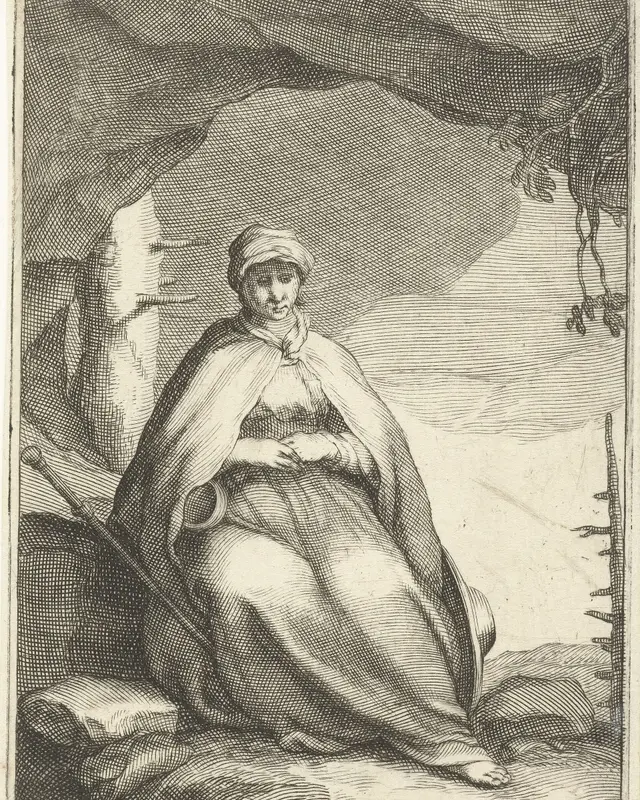
Saint Melania the Elder
Roman noblewoman, widowed young, who lived monastic life in Egypt and Jerusalem
- Rank
- Saint
- Kind
- Layperson, Religious
- Feast
- 8 June
- Countries
- Italy, Palestinian Territories
Life story
She was born around 350 (estimates range from about 325 to 350); sources disagree whether she came from Spain or Rome, and her father, Marcellinus, held consular rank. She was related to Paulinus of Nola. She married at fourteen, probably to Valerius Maximus Basilius. Her husband and two of her three sons died before she was twenty-two; she left her surviving son, Valerius Publicola, in the care of a guardian.
She went to Alexandria and stayed about six months with monks at Nitria. After Athanasius died in 373 she followed exiled monks to Diocaesaraea in Palestine and supported them; a governor briefly imprisoned her but released her once he learned her rank. According to accounts of her life, she founded a convent in Jerusalem and a monastery on the Mount of Olives for Rufinus of Aquileia. She was also a spiritual mentor to Evagrius of Pontus.
Because she supported Origen, Jerome criticised her harshly. Around 400 she went to Rome to see her son; her granddaughter later became Melania the Younger. She died in Jerusalem around 410 (sources give 409 or 410; some later writers say about 417). The sources are thin and her dates are approximate.
Works and witness
- Widowed very young and left her son with a guardian
- Stayed with monks at Nitria in Egypt for about six months
- Supported exiled monks at Diocaesaraea after 373
- Founded a Jerusalem convent and a Mount of Olives monastery, according to accounts of her life
- Spiritual mentor to Evagrius of Pontus
Saints from the same country
References
- Palladius, Lausiac History, ch. 54 (ecatholic2000.com)
- Encyclopedia.com, "Melania the Elder"
- Monastic Matrix, "Melania the Elder" (monasticmatrix.osu.edu)
Written by Anawim from documented history. Some details about ancient saints rest on tradition and are marked as such.