

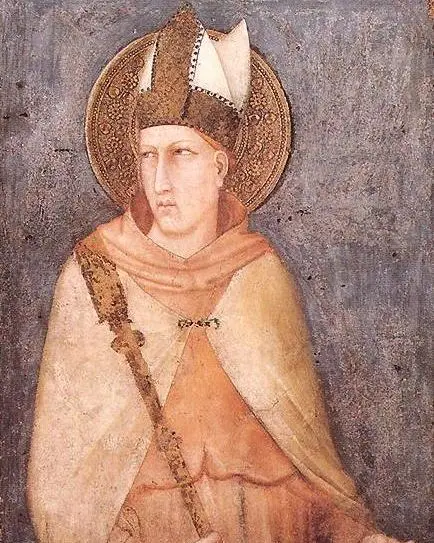
Saint Louis of Toulouse
Angevin prince who gave up a throne, became a Franciscan and bishop of Toulouse at twenty-two
- Rank
- Saint
- Kind
- Bishop, Royalty, Religious
- Life
- 1274 – 1297
- Era
- 13th century
- Feast
- 19 August
- Countries
- Italy, France
Life story
Louis was born on 9 February 1274, at Brignoles in Provence (a few sources say Nocera in Italy), the second son of King Charles II of Naples and Mary of Hungary and a nephew of King Saint Louis IX of France. When his father was captured in the war with King Peter III of Aragon, Louis was held as a hostage in Catalonia for about seven years; there he was looked after by Franciscan friars.
After the death of his elder brother Louis became heir to the throne of Naples. After his release in 1295 he gave up his claim in favour of his brother Robert. He was ordained priest in 1296 and received the Franciscan habit in Rome in December 1296.
Pope Boniface VIII named him bishop of Toulouse and he was consecrated at the end of December 1296 according to the Catholic Encyclopedia (another source gives 5 February 1297), aged 22. He held the see for less than a year; on the way back from a visit to his sister, the queen of Aragon, he fell ill with fever and died at Brignoles on 19 August 1297, aged 23.
Pope John XXII, once one of his teachers, canonised him on 7 April 1317. His feast is on 19 August.
Works and witness
- Held as a hostage in Catalonia for about seven years
- Renounced his claim to the throne of Naples in favour of his brother Robert after his release in 1295
- Received the Franciscan habit in December 1296
- Bishop of Toulouse from the end of 1296 (one source: February 1297); canonised in 1317
Saints from the same country
References
- Catholic Encyclopedia (New Advent), St. Louis of Toulouse (newadvent.org/cathen/09385c.htm)
- Franciscan Media, Saint Louis of Toulouse (franciscanmedia.org)
- Catholic Encyclopedia (New Advent), Toulouse (newadvent.org/cathen/14795b.htm)
Written by Anawim from documented history. Some details about ancient saints rest on tradition and are marked as such.