

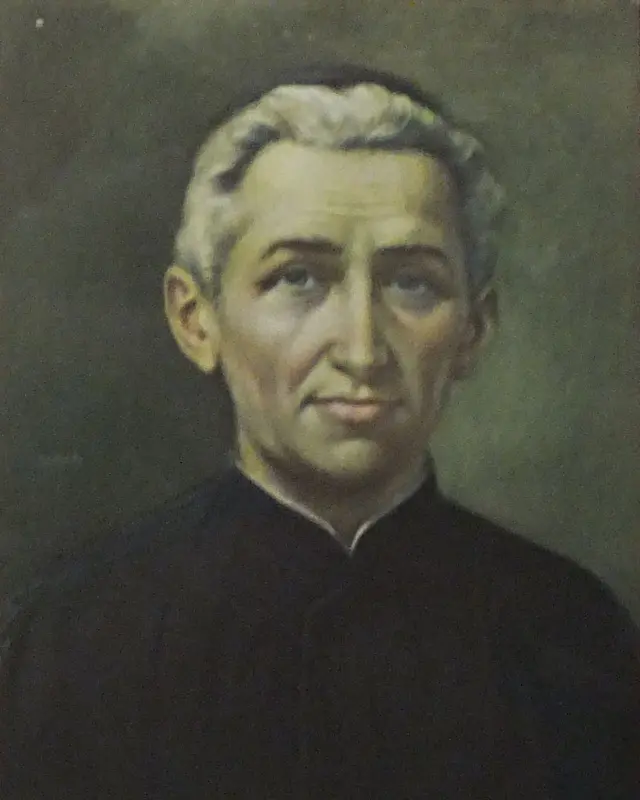
Saint Lodovico Pavoni
Brescia priest who ran a trade school and press for poor boys and founded the Pavonians
- Rank
- Saint
- Kind
- Priest, Founder
- Life
- 1784 – 1849
- Era
- 19th century
- Feast
- 1 April
- Countries
- Italy
Life story
Lodovico Pavoni was born on 11 September 1784 in Brescia into a well-off family, the first of four children of Alessandro Pavoni and Lelia Poncarali. He was ordained a priest on 21 February 1807. After his mother died in 1809 he founded an oratory for poor boys, first at the church of Sant'Orsola. In 1812 Bishop Gabrio Maria Nava made him his secretary, and on 14 February 1818 he became a canon of the cathedral and rector of the basilica of San Barnaba.
At San Barnaba he opened the Pio Istituto San Barnaba for orphaned and neglected boys, which opened in 1821 and received government approval in 1825. It included a printing school and taught a range of trades. After the cholera epidemic of 1836 he accepted deaf boys so they could learn a trade, and he learned sign language to communicate with them. He founded a congregation, the Sons of Mary, approved by the Austrian emperor on 9 December 1846 and canonically established on 11 August 1847; it was renamed Sons of Mary Immaculate in 1892.
During the Ten Days of Brescia, the uprising that began on 23 March 1849, he took his boys to safety at Saiano, which weakened his health. He died at Saiano on 1 April 1849, aged 64. He was declared Venerable in 1947, was beatified by John Paul II on 14 April 2002 and canonised by Pope Francis on 16 October 2016. His feast day is 1 April.
Works and witness
- Ordained in 1807 and founded an oratory for poor boys
- Opened the San Barnaba Institute in 1821 with trade and printing schools
- Took deaf boys into the institute after the 1836 cholera epidemic
- Founded the Sons of Mary, canonically established in 1847
- Led his boys to Saiano during the Ten Days of Brescia in 1849
Saints from the same country
References
- Lodovico Pavoni (Italian site): 'La vita', lodovicopavoni.it/pages/la_vita.html
Written by Anawim from documented history. Some details about ancient saints rest on tradition and are marked as such.