

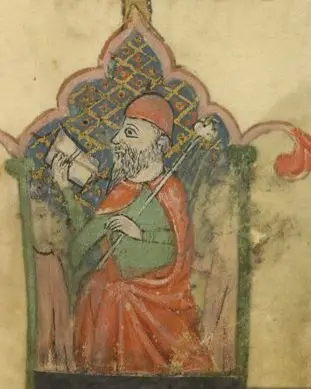
Saint Gamaliel
The Pharisee teacher who urged the Sanhedrin to spare the apostles
- Rank
- Saint
- Kind
- Layperson, Biblical figure
- Feast
- 3 August
- Countries
- Israel
Life story
The Acts of the Apostles introduces Gamaliel in chapter 5 as a Pharisee, a teacher of the Law, and a man respected by all the people. When the Sanhedrin in Jerusalem grew furious at the apostles for continuing to preach about Jesus, he rose, had the apostles taken outside for a while, and urged the council to be careful. He recalled two earlier movements that dissolved when their leaders died and proposed waiting: if this work were merely human it would collapse, but if it came from God no one could stop it. The council agreed, had the apostles beaten, and released them.
In Acts 22 Paul says he was trained strictly in the ancestral Law at the feet of Gamaliel. The New Testament says nothing more. Jewish sources call him Rabban Gamaliel I, a grandson of the master Hillel and a teacher of great authority, and the Mishnah records many of his rulings. Jewish tradition places his death around the middle of the first century.
The New Testament does not say he became a Christian, and Jewish sources treat him as a Pharisee to the end. Later Christian tradition varies: Photius, in the ninth century, says Peter and John baptized him, while the Clementine Recognitions (fourth century) portray him as a secret believer who stayed on the Sanhedrin. In 415 a priest named Lucian at Caphargamala near Jerusalem reported a vision that showed where Gamaliel, Stephen, Nicodemus and Abibo were buried. In 415 a priest named Lucian at Caphargamala near Jerusalem reported a vision that showed where Gamaliel, Stephen, Nicodemus and Abibo were buried. The Roman Martyrology commemorates that discovery on 3 August.
Works and witness
- Pharisee teacher of the Law, respected by all (Acts 5:34)
- Advised the Sanhedrin to leave the apostles alone
- Teacher of the young Paul (Acts 22:3)
- In Jewish sources, Rabban Gamaliel I, grandson of Hillel
- By tradition baptized; his tomb said to be found in 415
Saints from the same country
References
- New Testament – Acts of the Apostles
- Martyrologium Romanum
- Mishnah
Written by Anawim from documented history. Some details about ancient saints rest on tradition and are marked as such.