

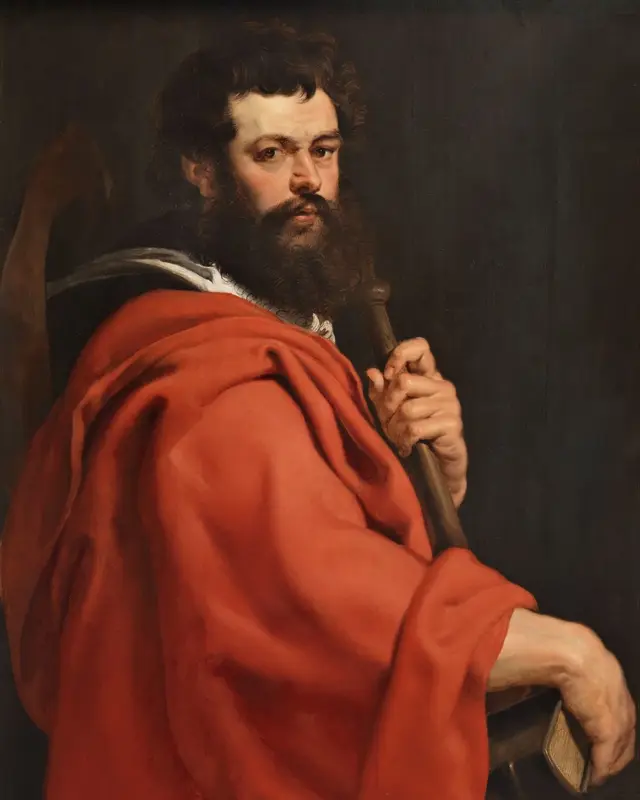
Saint James the Greater
Close disciple, brother of John, and the first apostle to be martyred
- Rank
- Saint
- Kind
- Apostle, Martyr
- Life
- d. ~44
- Era
- 1st century
- Feast
- 25 July
- Countries
- Israel, Spain
Life story
James was the son of Zebedee and the brother of John, and he fished on the Sea of Galilee. Together with Peter and John he belonged to the group of three disciples whom Jesus took with him at special moments, such as the Transfiguration and the prayer in Gethsemane. The Gospel of Mark says Jesus called the two brothers Boanerges, meaning sons of thunder.
The Acts of the Apostles states briefly that King Herod Agrippa had James killed with the sword, around the year 44. He is the only one of the Twelve whose death is recorded directly in the New Testament. The title James the Greater only distinguishes him from the other apostle named James, son of Alphaeus; it does not imply he was older or more important.
A tradition that appeared many centuries later says that he had preached in Spain and that his body was carried to Galicia. Historians regard the evidence for this as weak. Even so, from about the ninth century his tomb has been honoured at Santiago de Compostela, which became one of the great pilgrimage destinations of medieval Europe, and the pilgrim road known as the Camino de Santiago is still walked by many today. The brothers' mother is also mentioned in the Gospels, and the family is described as running a fishing business with hired workers. His feast is kept on 25 July.
Works and witness
- Galilean fisherman and one of the three disciples closest to Jesus
- With his brother John, nicknamed son of thunder
- Beheaded by Herod Agrippa around 44, according to Acts
- According to tradition, his body rests at Santiago de Compostela
- The Camino de Santiago pilgrim route is named after him
Patron of
Spain
Saints from the same country
References
- Tân Ước: Tin Mừng Marcô và Công vụ Tông đồ (New Testament: Mark and Acts)
- Eusebius, Church History
- Martyrologium Romanum
Written by Anawim from documented history. Some details about ancient saints rest on tradition and are marked as such.