

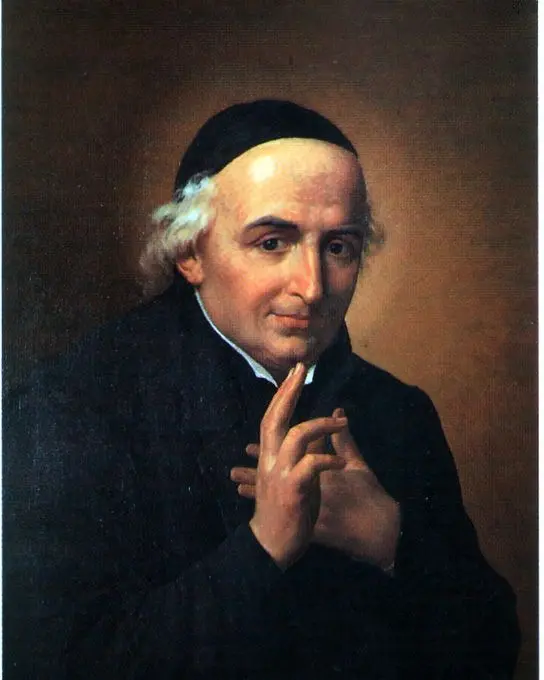
Saint Francis Xavier Bianchi
Barnabite priest of Naples, known as the apostle of the city
- Rank
- Saint
- Kind
- Priest, Religious
- Life
- 1743 – 1815
- Era
- 19th century
- Feast
- 31 January
- Countries
- Italy
Life story
Francis Xavier Mary Bianchi was born on 2 December 1743 in Arpino, then part of the Kingdom of Naples. According to his biographers he was guided by Saint Alphonsus Liguori, and John Paul II calls him a disciple of Saint Alphonsus. He entered the Barnabite novitiate at Zagarolo in 1762, professed vows the next year, and was ordained a priest in 1767.
He was assigned to the monastery of Santa Maria di Caravaggio in Naples and lived there for the rest of his life. He taught, directed souls and heard confessions, and was concerned for the poor. The Catholic Encyclopedia calls him the Thaumaturgus of Naples; the title reflects his reputation in the city and is not itself a verified historical claim.
According to one biography, after an ecstasy while praying before the exposed Blessed Sacrament at Pentecost in 1800, he fell ill with a condition that twisted his legs and left open sores for the rest of his life. In 1809, under the Napoleonic regime, his monastery was closed, but he remained in the city. He died in Naples on 31 January 1815. Pope Leo XIII beatified him in 1893 and Pope Pius XII canonized him on 21 October 1951.
Works and witness
- Entered the Barnabite novitiate at Zagarolo in 1762 and was ordained in 1767
- Lived at Santa Maria di Caravaggio in Naples, teaching and giving spiritual direction
- Named by John Paul II as a disciple of Saint Alphonsus Liguori
- Suffered a lasting illness after 1800
- Died on 31 January 1815; canonized on 21 October 1951
Saints from the same country
References
- Catholic Encyclopedia (New Advent), 'Barnabites'
- Vatican, John Paul II, address to the Barnabites, 8 July 2000
- Vatican, Pius XII, homily at the canonization of Giannelli, Bianchi and Laconi, 21 October 1951
Written by Anawim from documented history. Some details about ancient saints rest on tradition and are marked as such.