

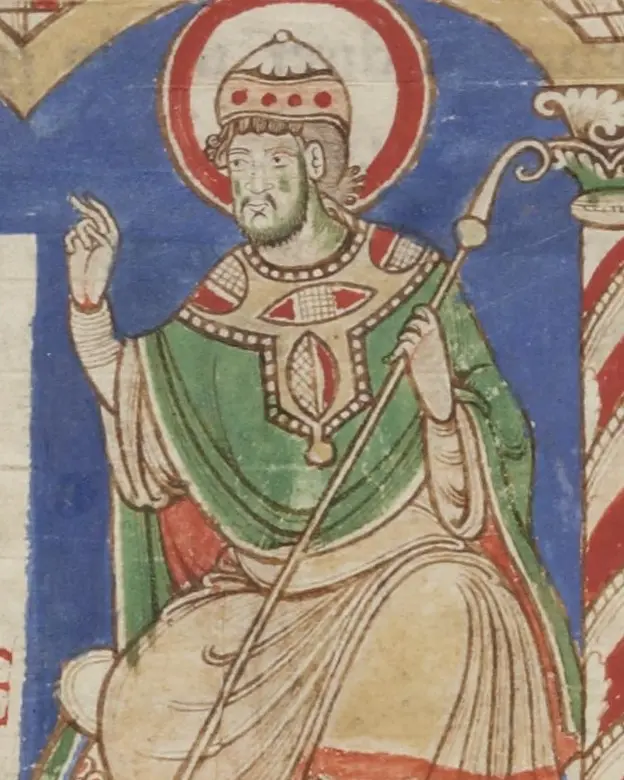
Saint Damasus I
Pope 366-384, who commissioned Jerome and set verses on martyrs' tombs
- Rank
- Saint
- Kind
- Pope
- Life
- ~305 – ~384
- Era
- 4th century
- Feast
- 11 December
- Countries
- Italy, Spain
Life story
Damasus was born around 305, perhaps in Rome or of Spanish family, and served as a cleric of the Roman Church before being elected bishop in 366. The election was disputed: a group backed Ursinus, leading to bloody clashes in Rome, and in the end the party of Damasus prevailed with the intervention of the state authorities.
During his eighteen-year pontificate he strengthened the position of Rome within the Latin Church and condemned various heresies through synods, including meetings in 368 and 369. A synod at Rome in 382 associated with him also dealt with a list of the books of Scripture. He invited Jerome to Rome as his secretary and charged him with revising the Latin Gospels, laying the groundwork for the later Vulgate.
Damasus loved poetry. He had many catacombs in Rome restored and composed verses in memory of the martyrs, carved as inscriptions on their tombs, which preserved many names and events from the age of persecution. The inscription on the tomb of Pope Sixtus II in the catacomb of Callixtus is one example. The inscriptions were cut in a distinctive script by the craftsman Furius Dionysius Filocalus.
He died on 11 December 384, the day on which he is remembered. Tradition says he was buried beside his mother and sister, and some scholars think he had prepared a separate tomb for himself. Later writers praised his learning and care for the martyrs' memory, although his critics, including supporters of Ursinus, accused him of harshness in the dispute over the see. His own surviving verses number several dozen, and many of the inscriptions can still be seen or have been reconstructed from copies.
Works and witness
- Bishop of Rome from 366 to 384, after overcoming the rival Ursinus
- Charged Jerome with revising the Latin Gospels
- Had many Roman catacombs restored
- Composed verse inscriptions for martyrs' tombs
- Associated with the Roman synod of 382
Saints from the same country
References
- Liber Pontificalis
- Jerome, De viris illustribus
- Martyrologium Romanum
Written by Anawim from documented history. Some details about ancient saints rest on tradition and are marked as such.