

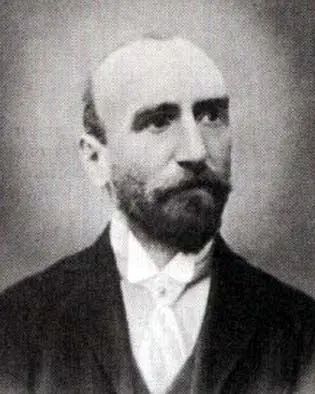
Blessed Contardo Ferrini
Professor of Roman law at Pavia and scholar of Byzantine legal texts
- Rank
- Blessed
- Kind
- Layperson
- Life
- 1859 – 1902
- Era
- 20th century
- Feast
- 17 October
- Countries
- Italy
Life story
Contardo Ferrini was born in Milan in April 1859 (sources give 4 or 5 April). He graduated in law at the University of Pavia in 1880 with a thesis on what the history of criminal law could learn from Homer and Hesiod, and with a scholarship he went to Berlin in autumn 1880 to study under leading historians of law. There he took part in the Conferences of Saint Vincent de Paul.
In 1883 he gained the right to lecture on Roman law at Pavia, then taught at Messina (1887) and Modena (1890), and returned to Pavia in 1894, where he remained until his death. In about twenty years he published more than two hundred scholarly works, including Diritto penale romano and critical editions of Roman-Byzantine legal texts; some editions prepared with Giovanni Mercati appeared after his death. From 1895 he served four years as a city councillor in Milan.
He died on 17 October 1902, aged forty-three, at Suna on Lake Maggiore, of a fever (typhoid or typhus, depending on the source) contracted during a holiday. Pope Pius XII beatified him in April 1947 (sources give 13 or 14 April). In his address to the faithful on that occasion he noted that Ferrini saw science and faith as complementary, and that he had worked no miracles in his lifetime.
Works and witness
- Graduated in law at Pavia in 1880 and studied Roman-Byzantine law in Berlin
- Taught at Pavia, Messina and Modena, returning to Pavia in 1894
- Published more than two hundred scholarly works
- Served as a Milan city councillor from 1895
- Died on 17 October 1902; beatified in April 1947
Saints from the same country
References
- Vatican, Pius XII, address to the pilgrims for the beatification of Contardo Ferrini, 14 April 1947
- Santi e Beati (santiebeati.it), 'Beato Contardo Ferrini'
Written by Anawim from documented history. Some details about ancient saints rest on tradition and are marked as such.