

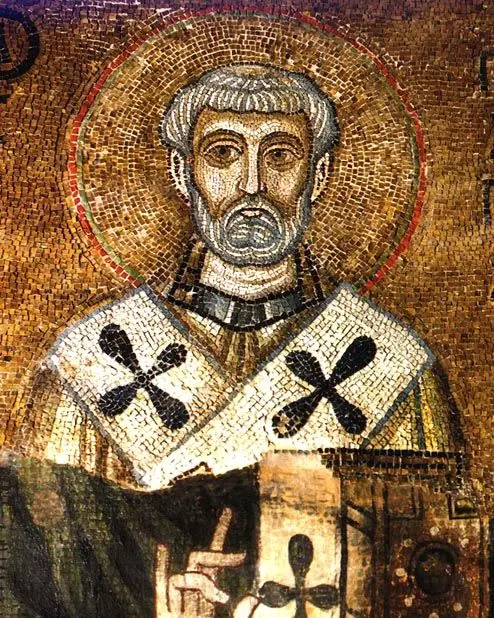
Saint Clement of Rome
A bishop of Rome around the end of the first century and author of a letter to Corinth
- Rank
- Saint
- Kind
- Pope, Martyr
- Life
- d. ~99
- Era
- 1st century
- Feast
- 23 November
- Countries
- Italy, Ukraine
Life story
Little about Clement's life is certain. Early writers such as Irenaeus count him as the third or fourth successor of Saint Peter in leading the Roman Church, after Linus and Anacletus. His birthplace is unknown. He led the Roman community around the end of the first century, in the reign of Domitian. His name is tied to a letter sent to the Church of Corinth, written around the year 96.
The letter was prompted by events in Corinth, where some younger members had removed older presbyters from office. Although the author's name is not written in the letter, ancient witnesses such as Dionysius, bishop of Corinth in the late second century, ascribed it to Clement, writing on behalf of the Roman community. It urges a return to peace and order, quotes the Old Testament at length and mentions the sufferings of Peter and Paul. In many ancient churches it was read aloud in public, and it is among the oldest Christian texts outside the New Testament.
According to later tradition, Clement was exiled to Chersonesus on the Black Sea, in modern Crimea, forced to work in the quarries and put to death by being thrown into the sea with an anchor tied to his neck. This account comes from late sources and cannot be verified. In 867 the brothers Cyril and Methodius brought to Rome remains believed to be his. He is honoured today in the Basilica of San Clemente in Rome, and the Church keeps his feast on 23 November.
Works and witness
- One of the first bishops of Rome after Saint Peter
- Believed author of the letter to the Church of Corinth, around 96
- Urged peace and order in the divided Corinthian community
- Tradition says he was exiled to Chersonesus (Crimea) and died there
- The Basilica of San Clemente in Rome is linked to his name
Saints from the same country
References
- Clement of Rome, Letter to the Corinthians (1 Clement)
- Irenaeus of Lyon, Adversus haereses
- Martyrologium Romanum
Written by Anawim from documented history. Some details about ancient saints rest on tradition and are marked as such.