

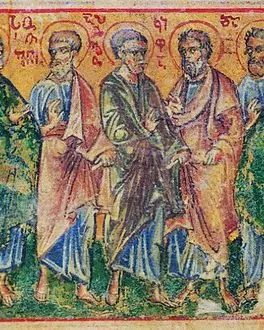
Saint Apollos
The eloquent Alexandrian who knew the Scriptures well
- Rank
- Saint
- Kind
- Missionary, Biblical figure
- Countries
- Egypt, Türkiye, Greece
Life story
Acts 18 introduces Apollos as a Jew born in Alexandria, an eloquent man with a strong knowledge of the Scriptures. When he arrived in Ephesus he taught about Jesus with great fervour, though the text says he knew only the baptism of John. Priscilla and Aquila heard him speak in the synagogue, took him aside and explained the way of God to him more accurately.
When he wished to cross to Achaia, the believers at Ephesus encouraged him and wrote to the disciples there on his behalf. On arriving, according to Acts, he was a great help to the believers and vigorously refuted the Jews in public, using the Scriptures to show that Jesus was the Messiah. Acts 19 notes that he was in Corinth when Paul came to Ephesus.
First Corinthians shows that his influence in Corinth was strong enough that some people claimed to belong to Apollos, but Paul says that he planted, Apollos watered, and God gave the growth (1 Corinthians 1 and 3). In 1 Corinthians 16 Paul says he urged Apollos to visit Corinth but that Apollos was unwilling to go at that time. The Letter to Titus 3 also names him. Scripture is silent on his death; later traditions make him a bishop at Corinth or elsewhere, but there is no firm evidence. Since Luther, some have proposed him as the author of the Letter to the Hebrews, but this is only a hypothesis.
Works and witness
- Alexandrian Jew, eloquent and learned in the Scriptures (Acts 18)
- Instructed more fully by Priscilla and Aquila at Ephesus
- Went to Achaia with a letter of recommendation and helped the church in Corinth
- Named by Paul as a co-worker in 1 Corinthians
- Sometimes proposed as author of Hebrews, though this is unproven
Saints from the same country
References
- New Testament – Acts of the Apostles
- New Testament – First Letter to the Corinthians
- Martyrologium Romanum
Written by Anawim from documented history. Some details about ancient saints rest on tradition and are marked as such.