

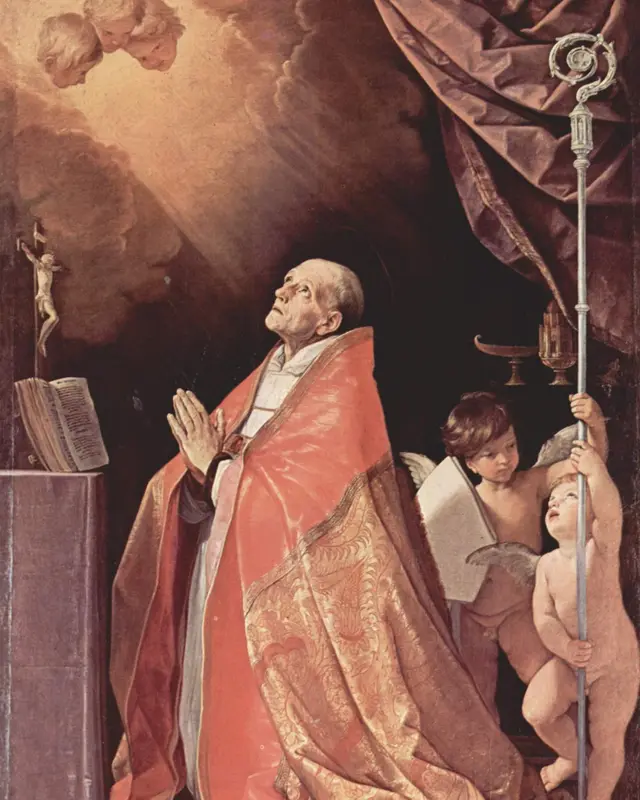
Saint Andrew Corsini
Florentine Carmelite, bishop of Fiesole and peacemaker at Bologna
- Rank
- Saint
- Kind
- Bishop, Religious
- Life
- 1302 – 1373
- Era
- 14th century
- Feast
- 4 February
- Countries
- Italy
Life story
Andrew Corsini was born on 30 November 1301 or 1302 (sources differ) in Florence, into the distinguished Corsini family. According to tradition he had an unruly youth, until words of his mother turned him around and he entered the Carmelites in Florence. He studied at Paris and Avignon. After returning he became known as the “Apostle of Florence” and was regarded by many as a prophet and wonder-worker.
In 1349 Pope Clement VI appointed him bishop of Fiesole. A legend says he went into hiding on hearing the news, but a child found him and he was compelled to accept. Historians treat this as a hagiographical story rather than an established event. As bishop he increased his austerities and was generous to the poor.
He was sent to Bologna as papal legate to heal a breach between the nobility and the people, and he was sought out as a peacemaker elsewhere. According to one source, the Bologna mission was entrusted to him by Pope Urban V.
He died on 6 January 1373 (some sources give 1374 by the Florentine calendar). Tradition says the Virgin Mary foretold the day of his death to him, and that Florence's victory over Milan at Anghiari in 1440 was due to his intercession; these are traditional claims, not historical findings. Pope Eugene IV allowed a public cult soon afterwards and Pope Urban VIII canonized him in 1629.
Works and witness
- Entered the Carmelites in Florence and studied at Paris and Avignon
- Became known as the “Apostle of Florence”
- Bishop of Fiesole from 1349 until his death
- Served as papal legate to reconcile nobles and people at Bologna
- Canonized by Pope Urban VIII in 1629
Saints from the same country
References
- Catholic Encyclopedia (1907), entry St. Andrew Corsini (New Advent, cathen/01472d)
- Carmelites (ocarm.org), St Andrew Corsini, Bishop
Written by Anawim from documented history. Some details about ancient saints rest on tradition and are marked as such.