

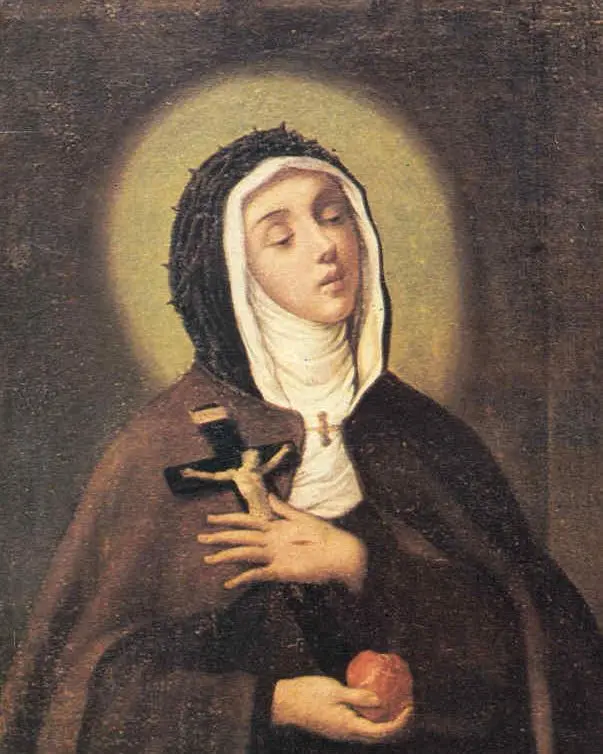
Saint Veronica Giuliani
The Capuchin Poor Clare abbess of Città di Castello who left a vast diary
- Rank
- Saint
- Kind
- Virgin, Mystic, Religious
- Life
- 1660 – 1727
- Era
- 18th century
- Feast
- 9 July
- Countries
- Italy
Life story
Veronica Giuliani was born on 27 December 1660 in Mercatello, in the Marche region of Italy, and was baptised Orsola. Her father worked in the local customs service. From childhood she was known as a serious-minded girl, and as she grew older she was determined to enter religious life, even though her family at first had other plans for her.
In 1677 she joined the Capuchin Poor Clare convent in Città di Castello, in Umbria, and received the religious name Veronica. She remained there for the rest of her life. She was made novice mistress, the sister who guides new entrants, and sources say she held this role for several decades. In 1697 she was reported to bear the stigmata; Church authorities opened strict inquiries, and during them she was restricted in her authority within the convent.
At the order of her confessors she wrote a very long diary recording her inner life, running to many thousands of pages. This text later became the main source for the study of her life. In 1716 her sisters elected her abbess, and she carried that responsibility until her death, looking after the water supply, building work and daily life of the community.
She died on 9 July 1727 in Città di Castello. She was beatified in 1804 and canonised by Pope Gregory XVI in 1839. The Church keeps her feast on 9 July.
Works and witness
- Entered the Capuchin Poor Clare convent at Città di Castello in 1677
- Served for many years as novice mistress
- Reported to bear the stigmata in 1697, which prompted a Church inquiry
- Wrote a vast diary at her confessors' command
- Abbess from 1716 until her death in 1727
Saints from the same country
References
- Martyrologium Romanum
- Dicastery for the Causes of Saints – biographical profile
- Benedict XVI, general audience of 15 December 2010
Written by Anawim from documented history. Some details about ancient saints rest on tradition and are marked as such.