

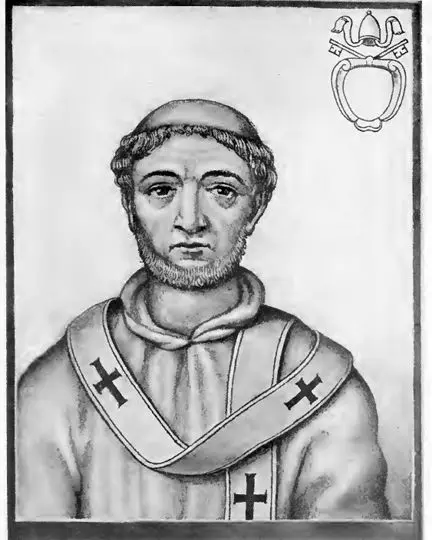
Saint Sixtus II and Companions
A pope beheaded in 258 with his deacons while gathering the community
- Rank
- Saint
- Kind
- Martyr, Pope
- Life
- d. ~258
- Era
- 3rd century
- Feast
- 7 August
- Countries
- Italy
Life story
Sixtus II became bishop of Rome in 257, after the death of Stephen I. He took office at a time when the Church was divided over whether to rebaptise people baptised in separatist groups. According to early sources he favoured conciliation and kept in contact with the Eastern churches and with Bishop Cyprian of Carthage.
In the same year the emperor Valerian issued an edict requiring clergy to sacrifice to the gods and forbidding Christians to gather in cemeteries. A harsher edict the following year prescribed death for bishops, priests and deacons. A letter of Cyprian written in 258 reports that Sixtus was seized while in the cemetery with his community and beheaded on 6 August 258. According to that letter, four deacons were executed with him, and tradition names them as Januarius, Vincent, Magnus and Stephen. Two further deacons, Felicissimus and Agapitus, were killed the same day.
Sixtus was buried in the catacomb of Callixtus on the Appian Way. Pope Damasus I later had a poem inscribed on his tomb. A few days after the pope's death, his deacon Lawrence was also put to death in Rome, and the two are often remembered together in tradition.
Sources still differ on whether the arrest took place in the catacomb of Callixtus or that of Praetextatus. The older liturgical calendar kept his feast on 6 August, the same day as the Transfiguration, and in 1969 the memorial of Sixtus and his companions was moved to 7 August.
Works and witness
- Bishop of Rome from 257
- Kept a conciliatory line with Bishop Cyprian and the Eastern churches
- Seized while meeting with his community in a cemetery, according to Cyprian
- Beheaded on 6 August 258 with four deacons
- His tomb in the catacomb of Callixtus bears a poem by Pope Damasus I
Saints from the same country
References
- Cyprian of Carthage, Letters
- Martyrologium Romanum
- Liber Pontificalis
Written by Anawim from documented history. Some details about ancient saints rest on tradition and are marked as such.