

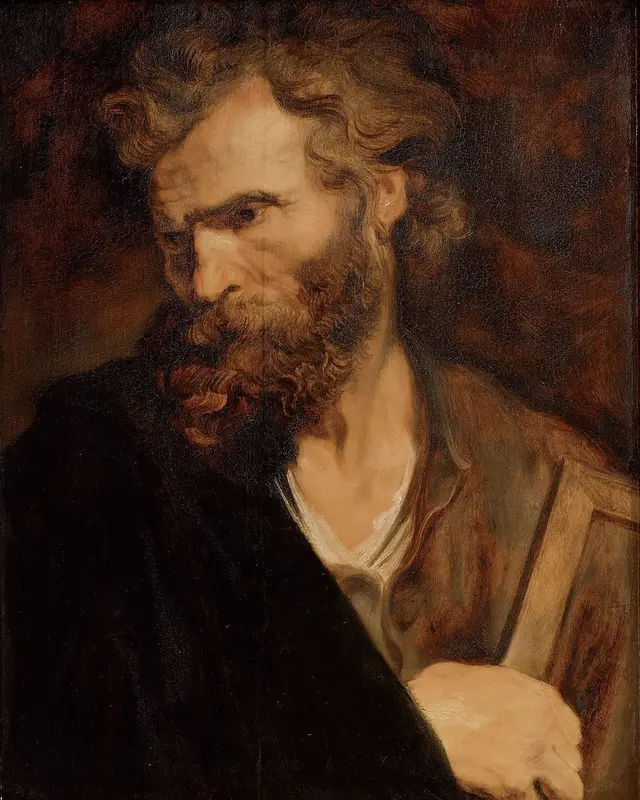
Saints Simon and Jude, Apostles
Two lesser-known apostles who share a single feast day
- Rank
- Saint
- Kind
- Apostle, Martyr, Missionary
- Feast
- 28 October
- Countries
- Israel, Iran
Life story
Both Simon and Jude appear only briefly in the New Testament. Simon is named in the lists of the Twelve with the title the Zealot or the Cananaean. This is usually understood to mean that he had once belonged to a fervent nationalist movement, or simply that he was very zealous for the Law. In Luke's lists Jude is called the son or the brother of James, while Matthew and Mark call him Thaddaeus. In John's Gospel a disciple named Judas, not Iscariot, asks Jesus a question at the Last Supper.
The Letter of Jude in the New Testament names its author as Jude, brother of James. Many in the tradition took this to be the apostle, though scholars today are divided. After Pentecost the New Testament says nothing further about either man. Later Western tradition holds that the two preached together in Persia and were martyred there. That story appears in late writings and should be treated as tradition, not historical record.
Relics held to be theirs are kept in St. Peter's Basilica in the Vatican. The Church joins the two in a shared feast on 28 October. In popular devotion many people turn to Saint Jude Thaddaeus in times of hardship. This is a widespread pious custom, not a patronage formally declared by the Church. Because the New Testament gives so little about them, later centuries filled the gap with legends, and historians treat the surviving accounts of their travels with caution.
Works and witness
- Simon the Zealot and Jude Thaddaeus, both counted among the Twelve
- Jude asks Jesus a question at the Last Supper in John's Gospel
- The New Testament Letter of Jude is written in the name of a brother of James
- By Western tradition, preached together in Persia and were martyred together
- Relics honoured in St. Peter's Basilica, Vatican
Saints from the same country
References
- Tân Ước / New Testament (Luke 6; John 14; Letter of Jude; Acts)
- Martyrologium Romanum
- Eusebius of Caesarea, Historia Ecclesiastica
Written by Anawim from documented history. Some details about ancient saints rest on tradition and are marked as such.