

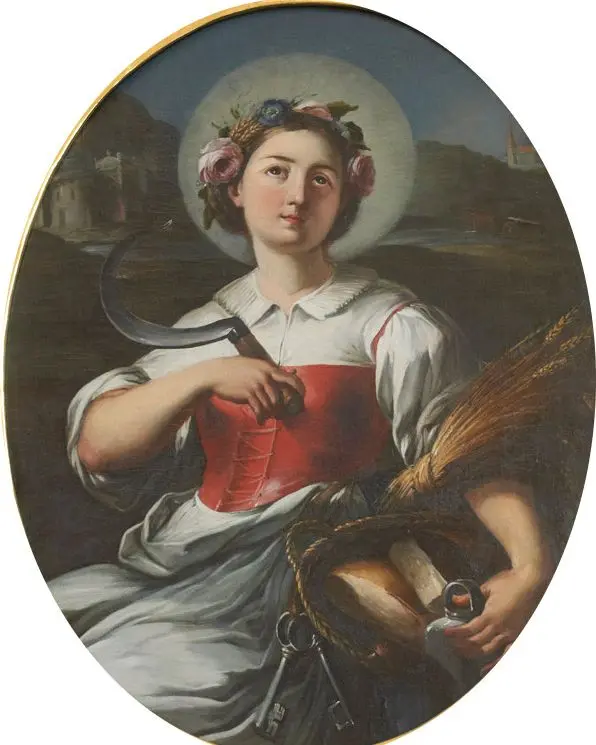
Saint Notburga
Tyrolean cook and farm servant remembered for sharing food with the poor
- Rank
- Saint
- Kind
- Layperson
- Life
- 1265 – 1313
- Era
- 14th century
- Feast
- 14 September
- Countries
- Austria
Life story
Notburga was born around 1265 at Rattenberg on the Inn in the Tyrol. She worked as a cook in the household of Count Henry and quietly shared food with the poor. When her mistress Ottilia ordered the leftovers fed to the pigs, she set aside her own meals, especially on Fridays, for the poor.
According to the legend, once her master stopped her to see what she carried and found only wood shavings, and the wine had turned to vinegar. Ottilia dismissed her but later fell gravely ill, and Notburga nursed her until her death. She then served a peasant at Eben on condition that she could attend church on the evenings before Sundays and feast days. When he pressed her to keep reaping, she threw her sickle into the air, called it the judge between them, and the legend says it stayed hanging there; hence she is often shown with a sickle.
Count Henry later suffered misfortunes, blamed them on dismissing her, and took her back, after which his household prospered. Before dying she asked to be laid on a wagon pulled by two oxen and buried where they stopped; by legend they stopped at the chapel of St Rupert near Eben. Sources place her death between 13 and 16 September 1313. Her cult was confirmed by Pope Pius IX on 27 March 1862. She is regarded as a patron of servants and peasants.
Works and witness
- Cook in Count Henry's household who shared food with the poor
- Nursed her former mistress Ottilia in her last illness after being dismissed
- Served a peasant at Eben, where legend says her sickle hung in the air
- Her cult was confirmed on 27 March 1862
Patron of
Servants, Peasants
Saints from the same country
References
- Catholic Encyclopedia (New Advent), 'St. Notburga', 1911
- Guarinoni (1646) and Hattler, cited in the Catholic Encyclopedia as sources of the legend
Written by Anawim from documented history. Some details about ancient saints rest on tradition and are marked as such.