

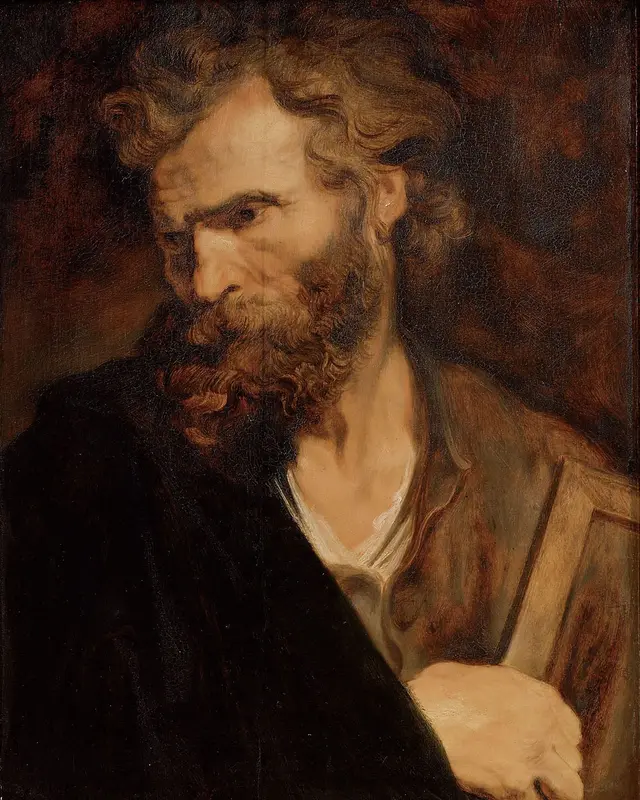
Saint Jude Thaddeus, Apostle
An apostle with two names, remembered for a question at the Last Supper
- Rank
- Saint
- Kind
- The Twelve Apostles, Apostle, Martyr, Biblical figure
- Feast
- 28 October
- Countries
- Israel, Iran
Life story
The lists of the Twelve in Luke 6 and Acts 1 name Judas, son of James. Matthew 10 and Mark 3 name an apostle called Thaddaeus, and some manuscripts of Matthew read Lebbaeus. Most readers identify these as one man, since Judas was a very common name and Thaddaeus was probably a nickname that avoided confusion with Judas Iscariot. John 14 records that at the Last Supper, Judas, not Iscariot, asked Jesus why he would reveal himself to the disciples and not to the world.
The New Testament also contains the Letter of Jude, a single short chapter whose author calls himself Jude, servant of Jesus Christ and brother of James. Tradition identifies him with this apostle, but many scholars think he was instead the Jude named among the brothers of Jesus in Mark 6, or that someone else wrote the letter in his name. The identity of the author therefore remains uncertain.
The New Testament says nothing about where he preached or how he died. According to later tradition, he preached in Mesopotamia and Persia and was martyred there together with Simon the Zealot; the sources for this were written centuries later and are legendary in character. Another tradition links him with King Abgar of Edessa, though that story is usually tied to a different disciple named Thaddaeus. The Church celebrates him with Saint Simon on 28 October.
Works and witness
- Listed among the Twelve under the names Judas and Thaddaeus
- Asks Jesus a question at the Last Supper (John 14)
- The Letter of Jude bears his name; its authorship is debated
- According to late tradition, martyred in Persia with Simon
Saints from the same country
References
- New Testament – Gospel according to John; Letter of Jude
- New Testament – Gospels of Matthew, Mark and Luke; Acts of the Apostles
- Martyrologium Romanum
Written by Anawim from documented history. Some details about ancient saints rest on tradition and are marked as such.