

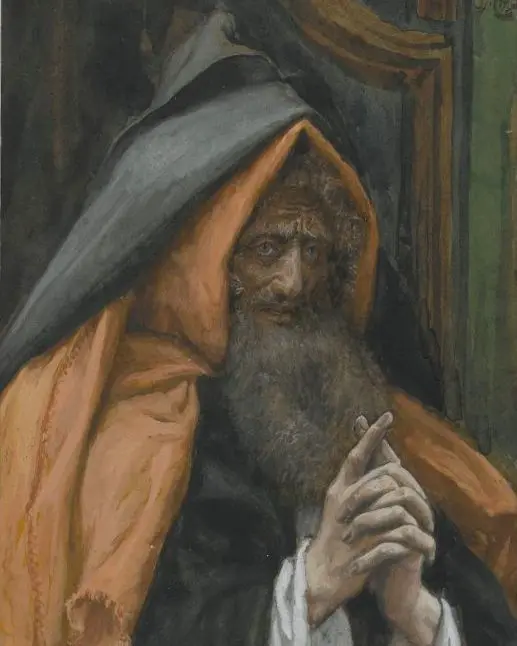
Saint Joseph of Arimathea
The member of the council who asked for the body of Jesus and buried him
- Rank
- Saint
- Kind
- Layperson, Biblical figure
- Feast
- 31 August
- Countries
- Israel
Life story
Joseph of Arimathea appears in all four Gospels, in the account of the burial of Jesus. Matthew 27 calls him a rich man and a disciple of Jesus. Mark 15 and Luke 23 describe him as a respected member of the council, the Sanhedrin, who was waiting for the kingdom of God; Luke adds that he was a good and upright man who had not agreed with the council's decision. John 19 says he was a disciple in secret because he feared the Jewish authorities.
On the evening of Friday he went boldly to Pilate and asked for the body of Jesus. After the centurion confirmed that Jesus was dead, Pilate granted the request. Joseph took the body down, wrapped it in a new linen cloth, and laid it in a new tomb cut in the rock, in a garden near the place of crucifixion. John 19 adds that Nicodemus brought spices for the burial. A large stone was then rolled across the entrance.
The location of Arimathea is not firmly established; many scholars identify it with the village of Ramathaim in the hill country of Ephraim. The New Testament says nothing further about him after this event.
Other stories are later tradition or legend. The apocryphal Gospel of Nicodemus says he was imprisoned after the burial. Medieval English legend claims he brought the Holy Grail to Glastonbury, but no early document supports this. In the current Roman Martyrology he is listed on 31 August; 17 March was the older date.
Works and witness
- Asked Pilate for the body of Jesus after his death
- Wrapped the body in linen and laid it in his own new tomb
- A member of the Sanhedrin who did not consent to its decision
- Commemorated on 31 August in the Martyrologium Romanum
Saints from the same country
References
- New Testament – Gospels of Matthew, Mark, Luke and John
- Martyrologium Romanum
- Gospel of Nicodemus (Acts of Pilate)
Written by Anawim from documented history. Some details about ancient saints rest on tradition and are marked as such.