

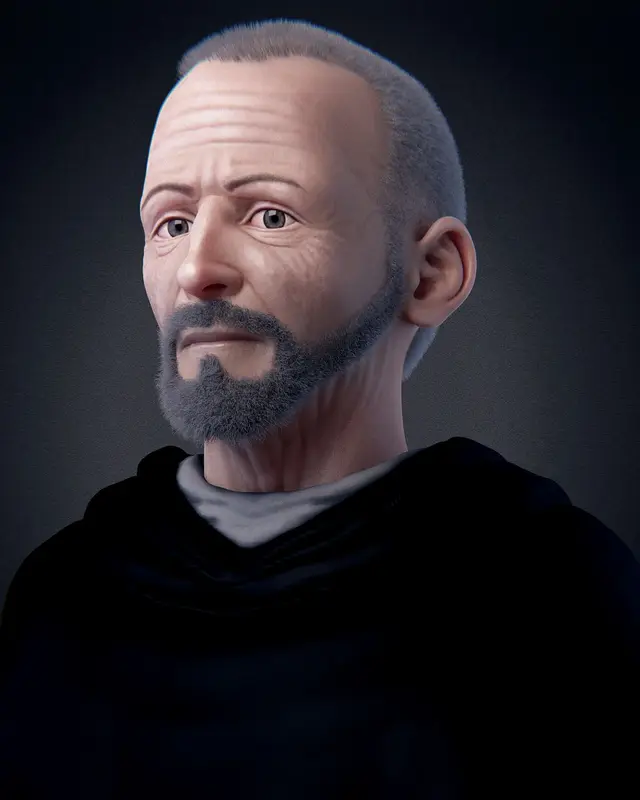
Saint John Macias
The Dominican lay brother who kept the door at Lima, once a shepherd of Extremadura
- Rank
- Saint
- Kind
- Religious
- Life
- 1585 – 1645
- Era
- 17th century
- Feast
- 18 September
- Countries
- Peru, Spain
Life story
John Macias, in Spanish Juan Macías, was born on 2 March 1585 in Ribera del Fresno, in the Extremadura region of Spain. He lost his parents at an early age and lived with relatives. As he grew up he worked as a shepherd, a hard and lonely job, and according to his biographers he spent many hours of the day in prayer.
He later left his homeland and sailed to Peru around 1619, where he worked with livestock near Lima. In 1622 he asked to join the Dominican order and was accepted as a lay brother, a religious who is not ordained a priest, at the priory of Santa María Magdalena in Lima.
Inside the priory he was given the job of porter and kept it for more than twenty years. At the gate he received the poor who came begging, and sources say he shared the priory's food with them, especially with the hungry and the sick. He also went around the city asking for alms to help those in need. He is remembered as well for his devotion in praying for the souls in purgatory. His quiet life, spent almost entirely at the priory gate, is the reason he is remembered among the Dominican lay brothers of colonial Peru.
He died on 16 September 1645 in Lima. He was beatified in 1837 and canonised by Pope Paul VI on 28 September 1975. The Church keeps his feast on 18 September.
Works and witness
- Worked as a shepherd in Extremadura as a young man
- Sailed to Peru around 1619 and worked with livestock near Lima
- Joined the Dominicans in 1622 as a lay brother
- Served as porter of the Santa María Magdalena priory for over twenty years
- Shared food and collected alms to help the poor
Saints from the same country
References
- Martyrologium Romanum
- Dicastery for the Causes of Saints – biographical profile
- Acta Apostolicae Sedis, canonisation of 1975
Written by Anawim from documented history. Some details about ancient saints rest on tradition and are marked as such.