

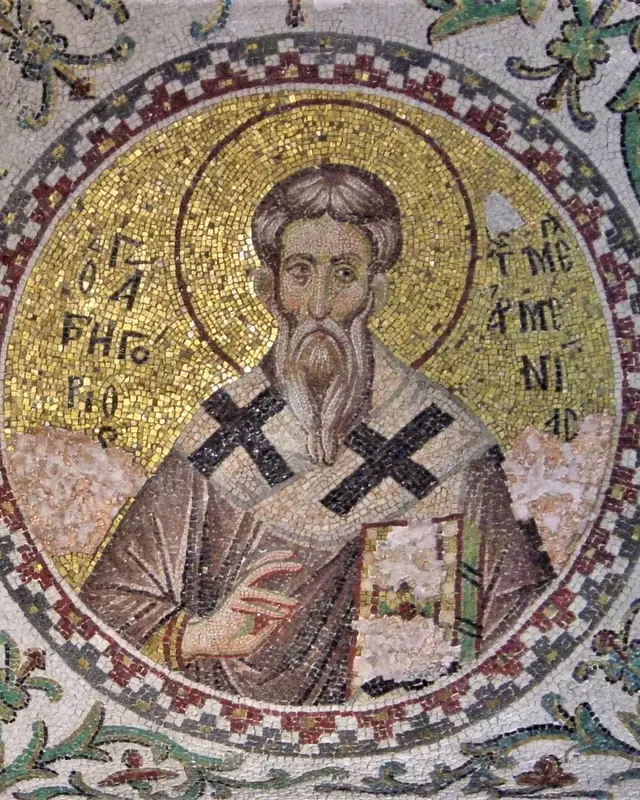
Saint Gregory the Illuminator
Founder of the Armenian Church who led the kingdom to Christianity
- Rank
- Saint
- Kind
- Bishop, Missionary
- Life
- d. ~331
- Era
- 4th century
- Feast
- 30 September
- Countries
- Armenia, Türkiye
Life story
Information about Gregory comes mainly from Armenian historians writing centuries later, so many details are traditional. According to them he was born around 257, a son of Anak, a Parthian nobleman said to have killed the Armenian king Khosrov. His family was wiped out, but the infant Gregory was taken to Caesarea in Cappadocia and grew up Christian.
As an adult he returned to Armenia and entered the service of King Tiridates III. Tradition says that when he refused to offer sacrifice to the goddess Anahit, the king had him tortured and then thrown into a deep pit at Khor Virap, where he stayed thirteen to fifteen years depending on the source. He was finally released, is said to have healed the king, and was consecrated bishop at Caesarea. He baptised Tiridates and many Armenians, destroyed pagan temples, built churches and founded schools. Vagharshapat became the centre of the new Church.
Tradition dates the conversion to 301, making Armenia the first state to adopt Christianity as its religion, although many modern scholars prefer about 314. Late in life he handed leadership to his son Aristakes and retired as a hermit; he died around 331, though one historian gives 328. His descendants, the Gregorids, held the leadership of the Church for generations. He is venerated in the Armenian, Catholic, Orthodox and several other Churches.
Works and witness
- First Catholicos of the Armenian Church
- According to tradition, imprisoned for years in the pit at Khor Virap
- Baptised King Tiridates III and many Armenians
- Built churches, founded schools, destroyed pagan temples
- His descendants led the Church for generations
Patron of
Armenia
Saints from the same country
References
- Agathangelos, History of the Armenians
- Movses Khorenatsi, History of the Armenians
- Martyrologium Romanum
Written by Anawim from documented history. Some details about ancient saints rest on tradition and are marked as such.