

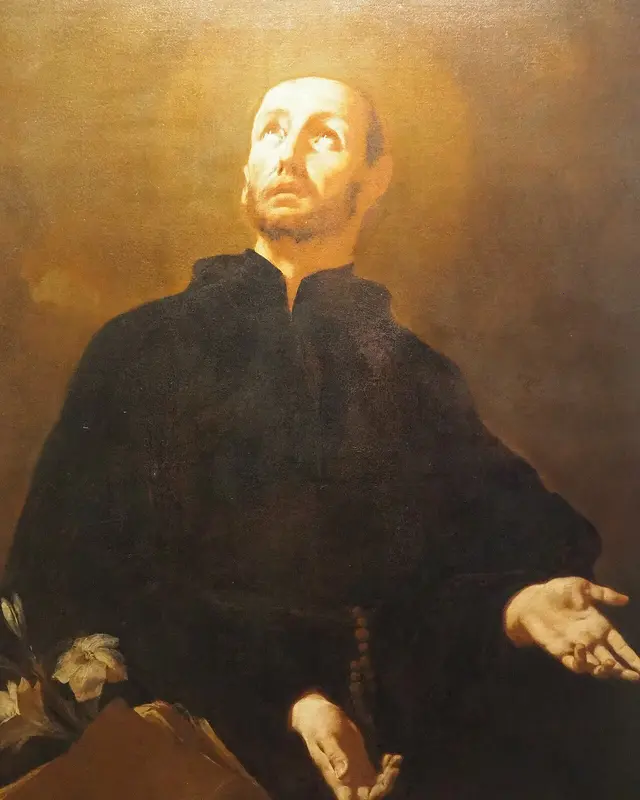
Saint Cajetan
The Vicenza priest who co-founded the Theatines to renew the clergy
- Rank
- Saint
- Kind
- Priest, Founder
- Life
- 1480 – 1547
- Era
- 16th century
- Feast
- 7 August
- Countries
- Italy
Life story
Cajetan, Gaetano in Italian, was born around October 1480 at Vicenza, in Venetian territory, into a noble family. He took a doctorate in law at Padua at about twenty-four. In 1506 he went to Rome to work at the court of Pope Julius II and took part in reconciling Venice with the pope. He was ordained priest in 1516.
He joined the Oratory of Divine Love in Rome, a group of priests and laymen devoted to prayer and charity, and later helped establish similar groups in other Italian cities. His aim was to renew the life of the clergy, which many then regarded as lax. In 1524, together with Gian Pietro Carafa, bishop of Chieti and later Pope Paul IV, Cajetan founded a society of clerics regular that later became known as the Theatines, a name taken from Theate, the Latin title of the diocese of Chieti.
When imperial troops sacked Rome in 1527, the Theatines had to flee to Venice. Later he founded a house at Naples in 1533 and worked in Venice, Verona and Vicenza. He died at Naples in 1547, reportedly out of grief at the discord in the city. He was beatified in 1629 under Urban VIII and canonised in 1671 under Clement X. In art he is usually shown holding the Christ child. The Theatines became known for their careful liturgy and for preaching, and in the following centuries the order produced many bishops.
Works and witness
- Took a doctorate in law at Padua and was ordained in 1516
- Joined the Oratory of Divine Love in Rome
- Co-founded the Theatines with Gian Pietro Carafa in 1524
- Fled to Venice during the Sack of Rome in 1527
- Founded a Theatine house at Naples in 1533
Patron of
The unemployed
Saints from the same country
References
- Martyrologium Romanum
- Catholic Encyclopedia (1907–1912), entry on Saint Cajetan
- Dicastery for the Causes of Saints – biographical profile
Written by Anawim from documented history. Some details about ancient saints rest on tradition and are marked as such.