

Anawim Catholic CommunicationsAnawim Catholic Communications
👥Community🔬Science and Faith📚Witness Stories🚶Samaritan Journey⛰️Game - Road to Mt Sinai🙏Prayer Wall📿Prayers📘Bible💧Divine Mercy✝️The Eucharist❤️‍🔥Sacred Heart of Jesus🌹Our Lady🎓Super Simple Catechism🤝Companion Support🕊️Stories of Saints

Anawim Mission

Physical care fulfillment and Catholic media mission companionship.

Send care via Stripe
LoginSettings
Knit

The Virgin Mary

Behold, I am the handmaid of the Lord; may it be done to me according to your word.

Lk 1:38

A young woman in Nazareth said “yes”, and the history of humankind changed course. This page follows her: from the few short lines in the Gospels, through two thousand years of the Church calling her by name, to the places where she is believed to have appeared, and the Rosary that generations have prayed through their fingers.

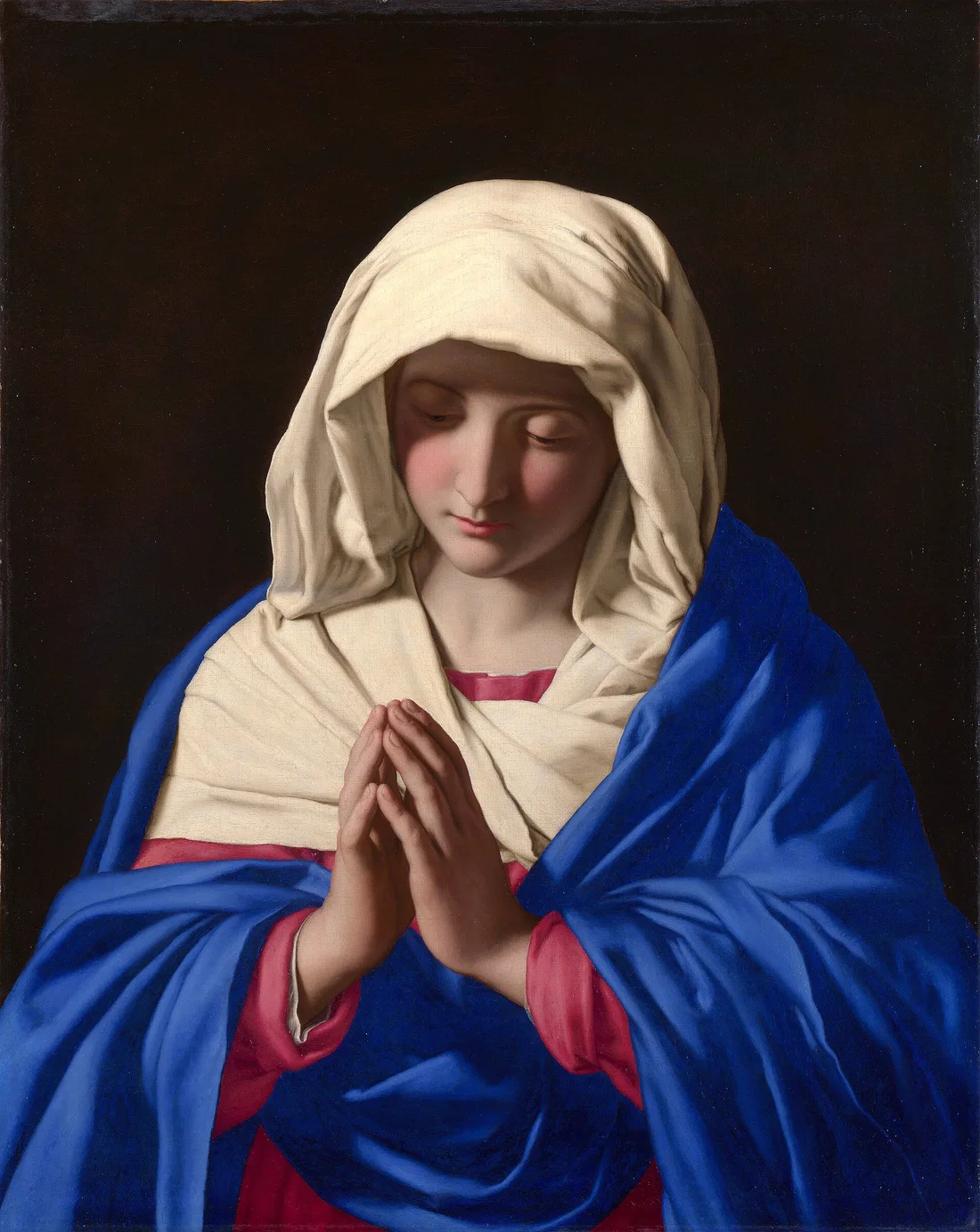
Painting of the Virgin Mary at prayer, in an ivory-white veil and a blue mantle, with her eyes cast down
Painting: Sassoferrato, 17th century
Today’s mysteries

The Joyful Mysteries

By the Church’s custom, each day of the week has its own set of mysteries:

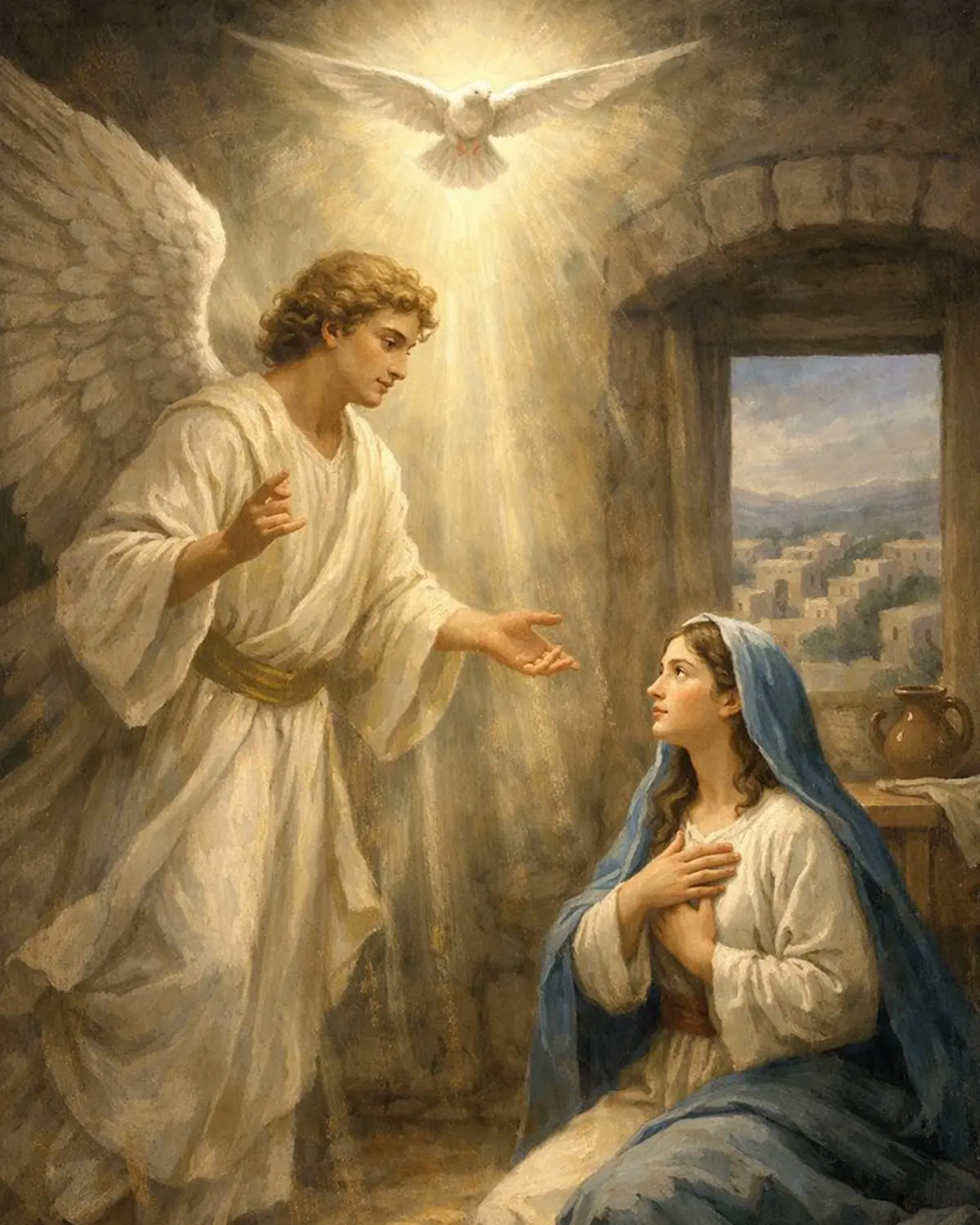
  1. 1The Annunciation of the angel to Mary
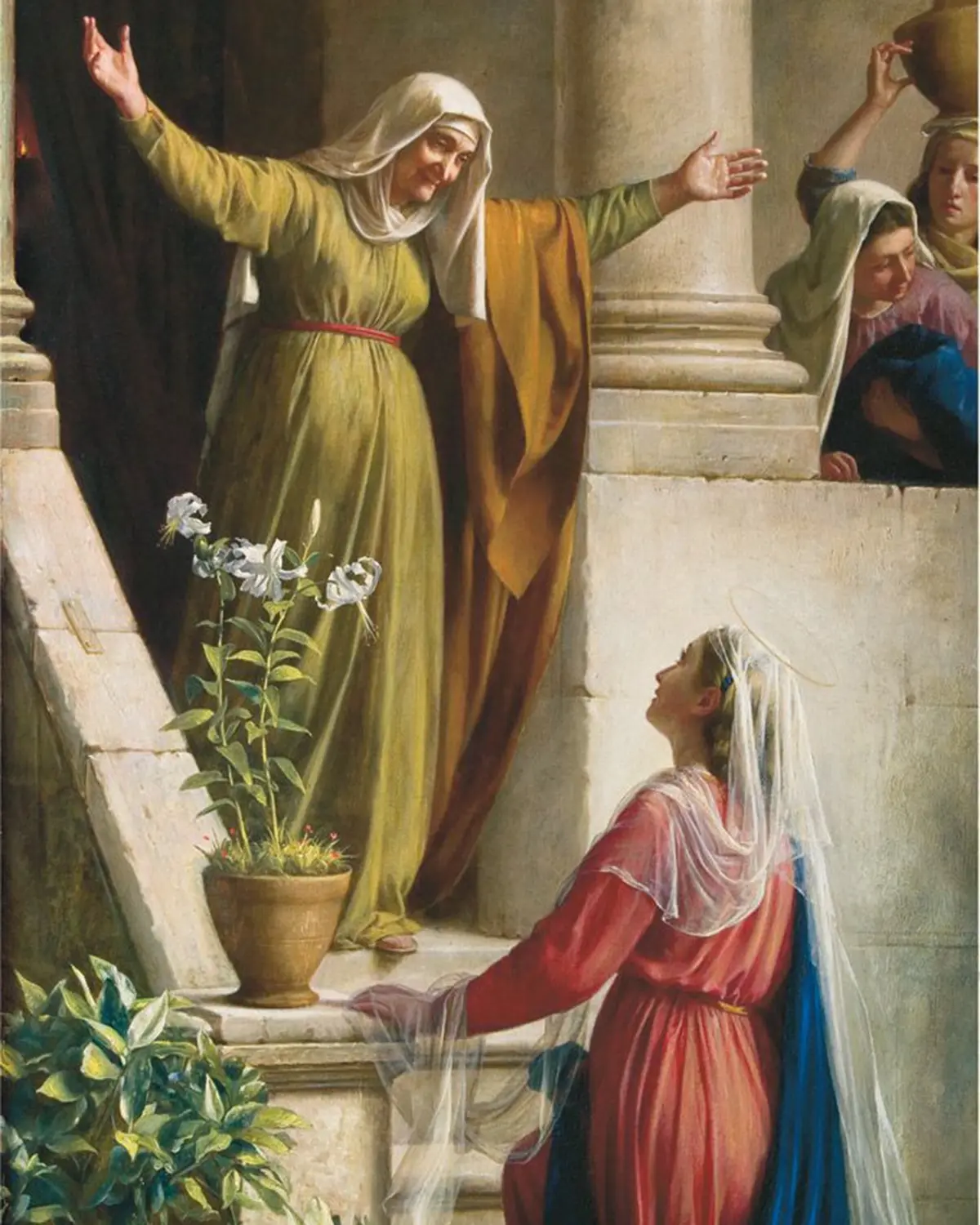
  2. 2The Visitation of Mary to Elizabeth
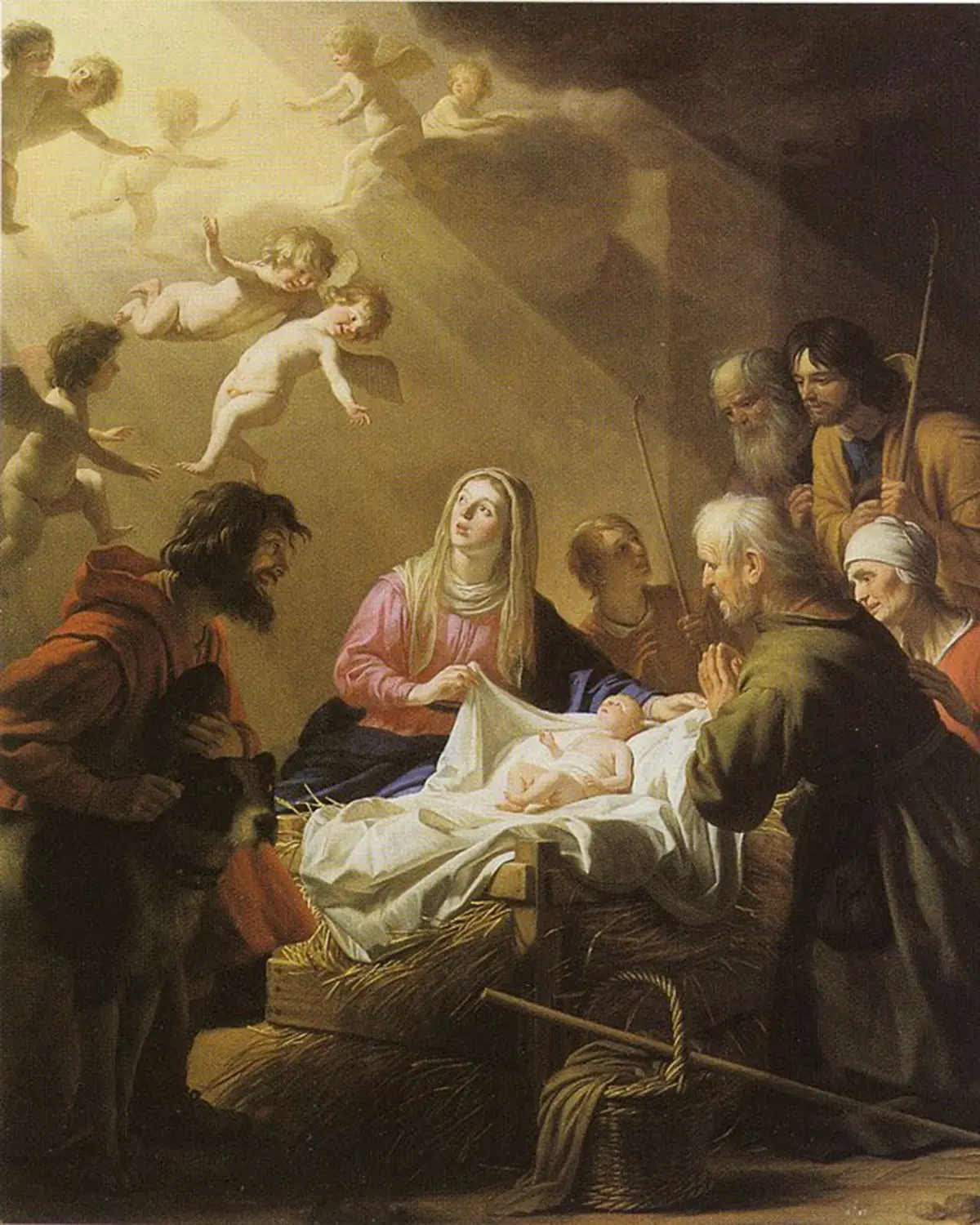
  3. 3The Birth of Jesus
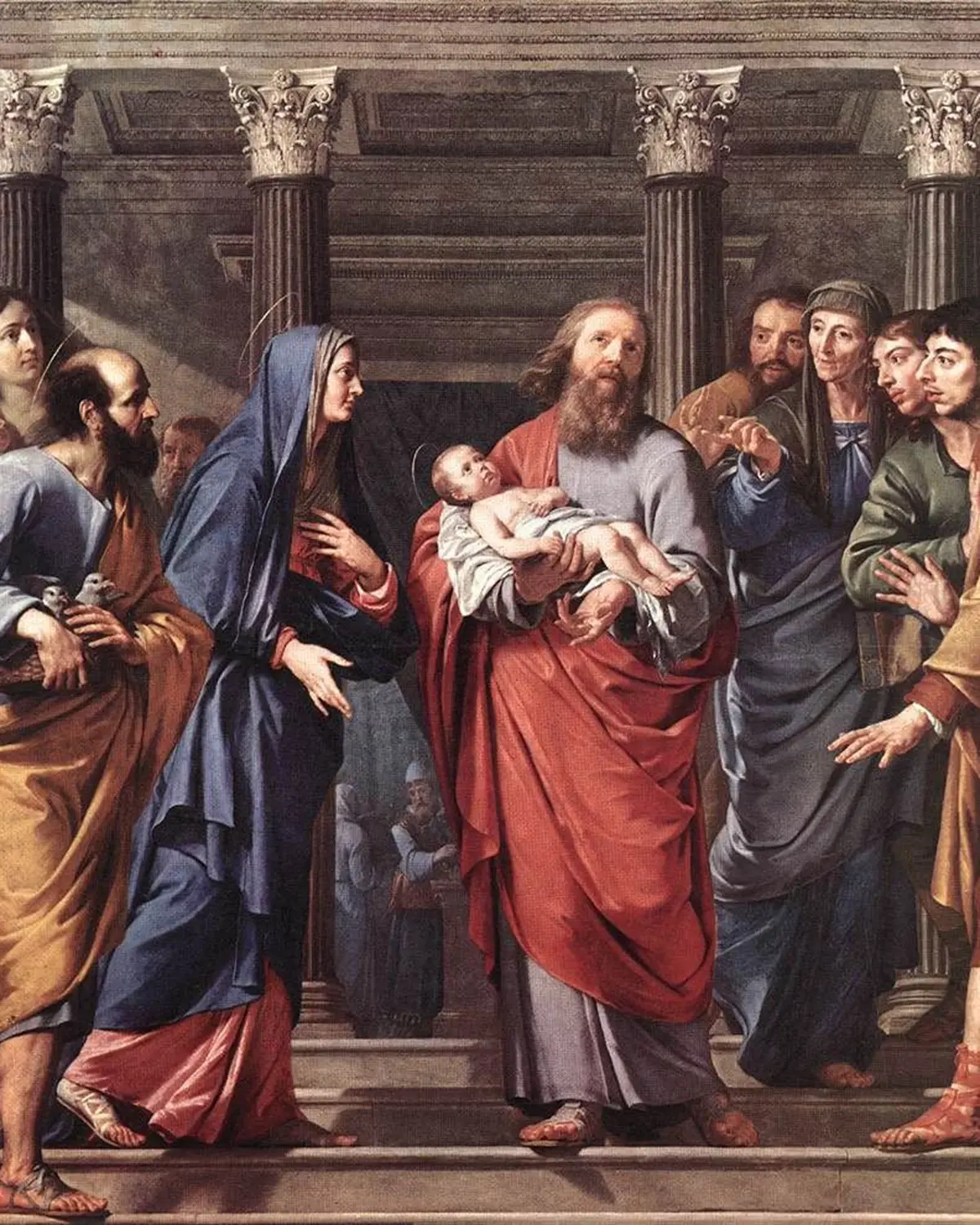
  4. 4The Presentation of Jesus in the Temple
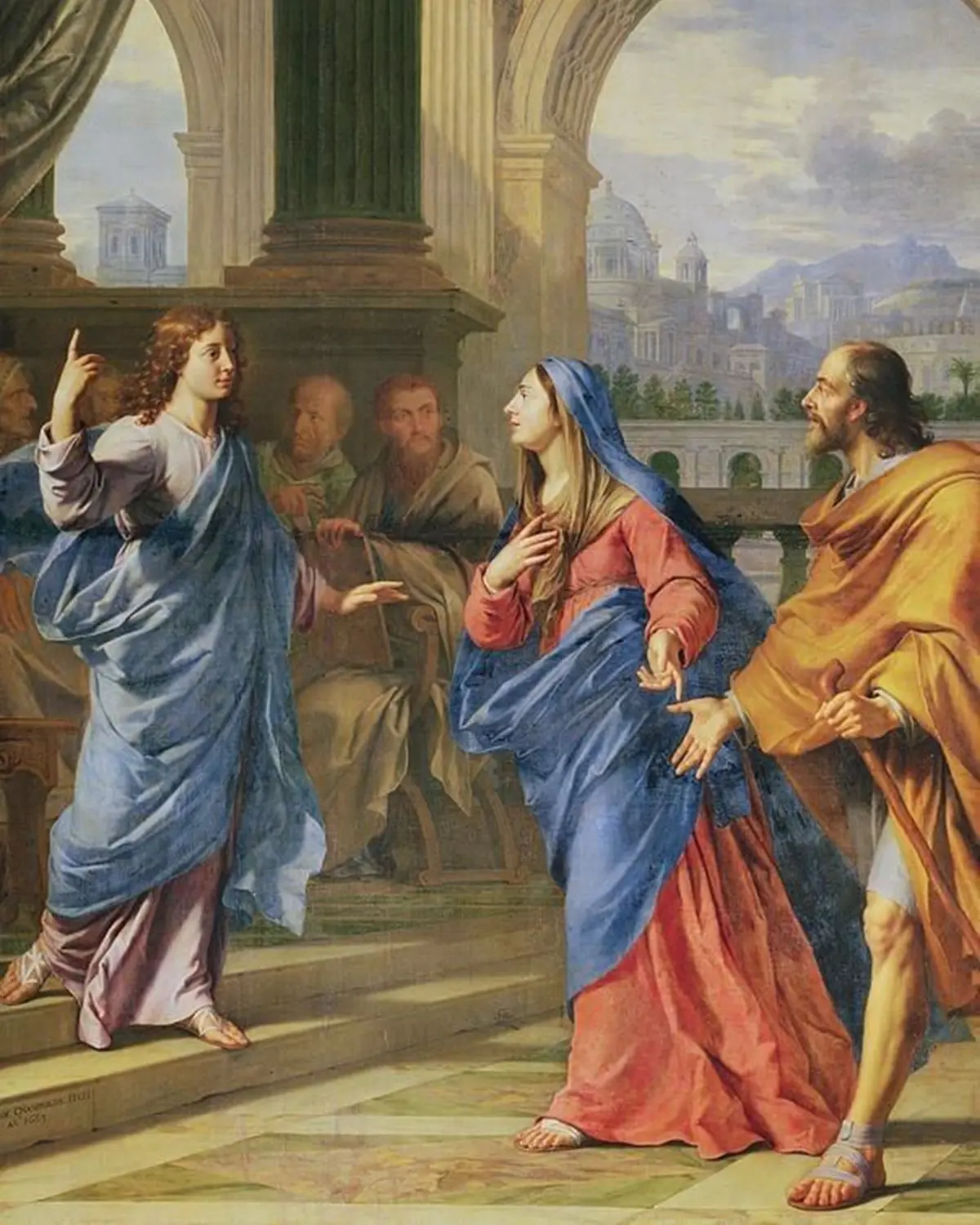
  5. 5The Finding of Jesus in the Temple
Pray this set

Who is she?

The Gospels say very little about her. The Church says a great deal, but always in order to speak rightly about her Son.

Mary (Miryam in Hebrew) was a young Jewish woman of Nazareth in Galilee, living under King Herod and the first Roman emperors. The Gospels record her name, her “yes”, a few moments when she was present beside her Son, and the last time she is mentioned: among the disciples at prayer, waiting for the Holy Spirit (Acts 1:14).

The Church does not remember her merely as a figure of the past. The Church professes four things about her: she is the Mother of God; she remained a virgin throughout her life; she was preserved from original sin from the moment of her conception; and when her earthly life was completed, she was taken up body and soul into the glory of heaven. All four point back to Jesus and do not stand alone.

The names of her parents, St Joachim and St Anne, are not in Scripture. They come from a 2nd-century apocryphal book (the Gospel of James), and the Church keeps them as a treasured tradition, not as the Word of God.

Name
Mary (Miryam)
Hometown
Nazareth, Galilee
Husband
St Joseph, a carpenter
Son
Jesus
Relative
Elizabeth, mother of John the Baptist
Parents (tradition)
St Joachim and St Anne
Birthday
8 September
Feast of the Assumption
15 August

Mary in Scripture

Thirteen stages, from the first promise to the last sign. The lines below only summarise; please open the Bible and read each passage in full.

  1. 01
    Gen 3:15

    The Woman and her offspring

    Right after the Fall, God promises that an offspring of the Woman will crush the serpent’s head. The Fathers of the Church read this promise in the light of Christ, and the Church recognises in that Woman the figure of Mary.

  2. 02
    Isa 7:14; Mt 1:22-23

    The virgin will conceive

    The prophet Isaiah announces the sign of Emmanuel, “God is with us”. The Gospel of Matthew reads those words in the conception of Jesus.

  3. 03
    Lk 1:26-38

    The Annunciation

    The angel Gabriel greets her as full of grace. She is troubled, asks a question, and then answers yes. That is the moment the Word becomes flesh.

  4. 04
    Lk 1:39-56

    The Visitation and the Magnificat

    She sets out in haste to visit Elizabeth. Elizabeth calls her “the mother of my Lord”. Mary answers with a song of praise to God, who looks on the lowly and lifts up the humble.

  5. 05
    Mt 1:18-25; Lk 2:1-7

    Joseph and Bethlehem

    St Joseph takes her into his home after being told in a dream. The Son of God is born in Bethlehem and laid in a manger because there was no room at the inn.

  6. 06
    Lk 2:22-38

    The Presentation in the Temple

    Simeon takes the child in his arms and tells Mary that a sword will pierce her own soul. For the first time, her joy is foretold to pass through suffering.

  7. 07
    Mt 2:13-23

    The flight into Egypt

    The family of Nazareth become refugees, leaving by night to escape King Herod. The Church remembers Mary whenever it thinks of those forced to leave their homeland.

  8. 08
    Lk 2:41-52

    Finding the boy in the Temple

    After three anxious days, she finds the twelve-year-old Jesus among the teachers. She does not fully understand his words, but she “kept all these things in her heart” (Lk 2:51).

  9. 09
    Jn 2:1-12

    The wedding at Cana

    She notices that the wine has run out and tells her Son: “They have no wine.” Then she speaks her last words in the Gospels, to the servants: “Do whatever he tells you.”

  10. 10
    Mk 3:31-35; Lk 11:27-28

    Who is my mother?

    Jesus does not diminish his mother when he says his family are those who hear and keep the word of God. The Second Vatican Council reads this as praise of her, since she is the one who heard and kept the Word most perfectly.

  11. 11
    Jn 19:25-27

    At the foot of the cross

    She stands there. Jesus says to her, “Woman, behold, your son,” and to the disciple, “Behold, your mother.” The Church reads this as entrusting her to be the mother of every disciple.

  12. 12
    Acts 1:12-14

    In the Upper Room

    After the Resurrection, she prays with the Apostles and a group of women, persevering as they wait for the gift of the Holy Spirit. This is the last time she is named in the New Testament.

  13. 13
    Rev 12:1-6

    The Woman clothed with the sun

    A great sign in heaven: a Woman clothed with the sun, the moon under her feet, and a crown of twelve stars on her head. The liturgy reads this image as both the Church and Mary.

Mary in the work of salvation

The Church does not place her beside Jesus as a second saviour. She stands within salvation as the one most fully saved, who welcomed the Saviour into her life by faith.

  1. 1Council of Ephesus, 431

    Mother of God

    The Council of Ephesus proclaimed Mary to be Theotokos, “the one who gave birth to God”. This title is first of all about Jesus, not about her: the Son in her womb is one Person, both true God and true man. Because she gave birth to him, she is called the Mother of God.

    Catechism, no. 495
  2. 2Faith and obedience

    A free collaborator

    God does not save human beings without their consent. Mary’s “yes” was a free collaboration, in faith and obedience, in a work that only God can accomplish. St Irenaeus says she became “the cause of salvation” for herself and for the whole human race, in the sense that she opened her heart for salvation to come.

    Lumen Gentium 56; Catechism, no. 494
  3. 3The 1854 dogma and the tradition of virginity

    Full of grace from the beginning

    The Church believes that, by virtue of the merits of her Son, Mary was preserved from original sin from the moment of her conception, and that she remained a virgin throughout her life. This was not her own achievement but a free gift: she is the first to be saved, and saved most completely.

    Ineffabilis Deus (1854); Catechism, nos. 490–511
  4. 4At the foot of the cross

    Our Mother

    On the cross, Jesus entrusts his mother to the beloved disciple and the disciple to her. The Church reads this as an entrusting that lasts: she is the spiritual mother of all believers. On 21 November 1964, Pope Paul VI proclaimed her “Mother of the Church”.

    Jn 19:26-27; Lumen Gentium 61–62; Catechism, nos. 963–970
  5. 5The 1950 dogma

    Completed in glory

    On 1 November 1950, Pope Pius XII defined the dogma: when her earthly life was completed, she was taken up body and soul into the glory of heaven. What the Church hopes for all people on the last day has already come true in her first: she is the image and the beginning of the Church that will be glorified.

    Munificentissimus Deus (1950); Catechism, no. 966
  6. 6The first disciple

    She who intercedes

    Since the Upper Room, she has remained one who prays with the Church. When the Church calls her Advocate or Helper, it adds nothing to Christ’s role as the one Mediator. She prays with us and for us, as a mother does, and always leads us back to her Son.

    Lumen Gentium 62; Mater Populi Fidelis 38–42

A note on the title “Co-Redemptrix”

The title “Co-Redemptrix” appeared in the 15th century and was used by some popes, but the Second Vatican Council deliberately avoided it.

On 4 November 2025, the Dicastery for the Doctrine of the Faith published the Doctrinal Note Mater Populi Fidelis (“Mother of the Faithful People”), approved by Pope Leo XIV. The document concludes that using this title for her cooperation is always inappropriate, because it risks obscuring the unique role of Christ as the one Redeemer and one Mediator. Instead, it suggests expressions such as “Mother of believers” and “spiritual Mother”.

The Congregation of the Mother of the Redeemer (CRM) itself, formerly the Congregation of the Mother Co-Redemptrix, changed its name on 7 April 2017 on the advice of the Holy See, because of the theological ambiguity of the title. For this reason, this page speaks of Mary as Mother of the Redeemer (Redemptoris Mater), who cooperated by faith, and not as a second redeemer.

Her titles

She once said: “From now on all generations will call me blessed” (Lk 1:48). Over two thousand years, those words have become hundreds of names. Here are the main ones, arranged by origin.

Names spoken by God himself, by the angel, by Elizabeth, by Jesus, and by Mary herself.

  • Full of grace

    The greeting of the angel Gabriel. The Greek word kekharitōmenē is a “new name” God gives her, speaking of the grace he has worked and is working in her.

    Lk 1:28
  • Mother of my Lord

    Elizabeth, filled with the Holy Spirit, calls her this. It is the seed of the title Mother of God.

    Lk 1:43
  • Blessed is she who believed

    Praise for her faith: she believed that what the Lord had spoken would be fulfilled.

    Lk 1:45
  • Handmaid of the Lord

    The name she gave herself while saying yes. She calls herself a servant, not a leader.

    Lk 1:38
  • Blessed by all generations

    She herself foretells every title on this page: “all generations will call me blessed”.

    Lk 1:48
  • The Woman

    Jesus calls her this at Cana and on the cross. The name links her to the promise in Genesis and to the sign in the Book of Revelation.

    Jn 2:4; 19:26; Gen 3:15; Rev 12:1

Mary in history after the Resurrection

The New Testament stops mentioning her after Pentecost, but the history of the Church never stops mentioning her. Here are the main milestones, from the Upper Room to the 21st century.

  1. Around AD 30

    The Upper Room

    She prays among the Apostles as they wait for the Holy Spirit. The Church is born with her at its centre (Acts 1:14).

  2. 2nd century

    The new Eve

    St Justin and St Irenaeus call her the “new Eve”: as Eve’s no led to the Fall, Mary’s yes opened the way to salvation.

  3. 3rd century

    Sub tuum praesidium

    The oldest surviving prayer to her, written on a scrap of papyrus in Greek: “We take refuge under your protection, Mother of God.” An image of Mary holding the Child in the catacomb of Priscilla in Rome also dates from this time.

  4. 431

    Council of Ephesus

    Proclaims Mary to be Theotokos, Mother of God. The people of Ephesus are said to have escorted the Fathers with torches in joy.

  5. 432–440

    Basilica of St Mary Major

    Pope Sixtus III dedicates the Basilica of St Mary Major (Santa Maria Maggiore) in Rome, the first great church of Mary in the West, just after the Council of Ephesus.

  6. 5th–6th century

    Feast of the Dormition and Assumption

    The East begins to celebrate the day she “fell asleep” (the Dormition), which became the feast of the Assumption on 15 August, kept by both East and West.

  7. 626

    The Akathist Hymn

    According to tradition, the people of Constantinople sang this hymn of praise to her all night while the city was under siege and then relieved. It is still sung in the Eastern liturgy.

  8. 11th century

    Salve Regina

    The prayer “Hail, Holy Queen” appears and spreads through the monasteries. Today it still closes the Rosary.

  9. 1095–1291

    The age of the Crusades

    Many regarded her as protector. The Carmelites began with hermits on Mount Carmel, the Teutonic Order bore her name, and St Bernard of Clairvaux, who preached the Second Crusade (1146), was also one of the most ardent voices about her. See also the Rosary section.

  10. 1208–1214

    St Dominic and the Rosary

    According to Dominican tradition, St Dominic received the Rosary from Our Lady while preaching in southern France, in the midst of the crusade against the Albigensians. Historians still debate this detail.

  11. 1218

    The Order of Ransom

    St Peter Nolasco founds the Mercedarians in Barcelona, devoted to ransoming captives, under the protection of Mary.

  12. 1251

    The Carmelite scapular

    According to tradition, St Simon Stock received the scapular from Mary. Since then the Carmelite scapular has become one of the most widespread signs of devotion to her.

  13. 1531

    Guadalupe

    Our Lady appears to Juan Diego in Mexico. Within a few decades, millions of indigenous people ask for baptism.

  14. 1571

    The Battle of Lepanto

    The Holy League formed by Pope Pius V defeats the Ottoman fleet on 7 October. Pius V and many others saw this as a grace obtained through the prayer of the Rosary, and he established the feast of Our Lady of Victory, now the feast of Our Lady of the Rosary.

  15. 1683

    The relief of Vienna

    On 12 September, the allied army led by King Jan III Sobieski of Poland relieves the siege of Vienna. Pope Innocent XI extends the feast of the Holy Name of Mary to the whole Church in thanksgiving.

  16. 1798

    La Vang

    Catholics of Quảng Trị, fleeing persecution, are said to have met Mary in the forest of La Vang.

  17. 1830–1871

    The century of apparitions in France

    Rue du Bac (1830), La Salette (1846), Lourdes (1858), Pontmain (1871): four apparition sites in just forty years, opening a period that popes have called “the century of Mary”.

  18. 1854

    The dogma of the Immaculate Conception

    Pope Pius IX proclaims it on 8 December. Four years later, at Lourdes, she introduces herself: “I am the Immaculate Conception”.

  19. 1917

    Fatima

    In the middle of the First World War, Mary appears to three shepherd children in Portugal. See the Fatima section.

  20. 1950

    The dogma of the Assumption

    Pope Pius XII proclaims the dogma on 1 November 1950, after consulting all the bishops of the world.

  21. 1964

    The Second Vatican Council

    Chapter VIII of the Constitution on the Church is devoted to her, placing her within the mystery of Christ and the Church. On 21 November 1964, Pope Paul VI proclaims her Mother of the Church.

  22. 1987

    Redemptoris Mater and the Marian Year

    St John Paul II issues an encyclical on Mary and opens a Marian Year (1987–1988).

  23. 2002

    The Year of the Luminous Mysteries

    In the Apostolic Letter Rosarium Virginis Mariae (16 October 2002), St John Paul II adds the Luminous Mysteries to the Rosary, raising the number of mysteries from 15 to 20.

  24. 2017

    One hundred years of Fatima

    On 13 May 2017, Pope Francis canonises the two children Francisco and Jacinta Marto at Fatima.

  25. 2020

    Three new invocations

    Pope Francis adds “Mother of Mercy”, “Mother of Hope” and “Solace of Migrants” to the Litany of Loreto.

  26. 2025

    Mater Populi Fidelis

    The Dicastery for the Doctrine of the Faith publishes a document that clarifies how to speak rightly about her role in salvation, and avoids the title “Co-Redemptrix”.

Map of the places where Mary appeared

Thirty-seven places across the world, from a house of the 1st century to the pilgrim gatherings of today. The colour of each point shows what the Church says about that place.

Our Lady of GuadalupeOur Lady of ŠiluvaOur Lady of LausOur Lady of the Miraculous Medal (Rue du Bac)Our Lady of La SaletteOur Lady of LourdesOur Lady of Good HelpOur Lady of PontmainOur Lady of KnockOur Lady of FatimaOur Lady of BeauraingOur Lady of Banneux (Virgin of the Poor)Our Lady of AkitaOur Lady of KibehoMedjugorjeOur Lady of the PillarOur Lady of AltöttingOur Lady of MontserratOur Lady of EinsiedelnOur Lady of WalsinghamOur Lady of MariazellHoly House of LoretoOur Lady of Częstochowa (the Black Madonna)Our Lady of Perpetual HelpOur Lady of VailankanniOur Lady of ManaoagOur Lady of Charity of El CobreOur Lady of LujánOur Lady of AparecidaOur Lady of La VangOur Lady of AfricaOur Lady of Sheshan (Shanghai)Our Lady of Trà KiệuOur Lady of Lebanon (Harissa)Marian DaysBasilica of the AnnunciationHouse of Mary (Meryem Ana)

37 places

No ruling yet

Medjugorje

Where
Medjugorje, Bosnia and Herzegovina
When
From 24 June 1981
Witnesses
Six young people

From 1981, a group of young people reported that Our Lady, whom they call “Gospa” (Our Lady), appeared and called for prayer, fasting, confession, the Eucharist and reading the Bible. The place receives millions of pilgrims. The Church has not declared the events supernatural; since 2019, Pope Francis has permitted organised pilgrimages, regarded as a pastoral matter and not an approval. On 19 September 2024 the Dicastery for the Doctrine of the Faith granted a nihil obstat to devotion to Our Lady under the title Queen of Peace because of its spiritual fruits, without declaring the events supernatural.

Shrine or pilgrimage place

Our Lady of La Vang

Where
Hải Lăng, Quảng Trị, Vietnam
When
1798

Under the persecution of King Cảnh Thịnh, Catholics of Quảng Trị fled into the forest of La Vang, hungry, cold and struck by disease. According to the account handed down, Our Lady appeared under a banyan tree, holding the Child, with two angels attending her, told them to boil the leaves of the tree and drink the water to be healed, and promised to hear the prayers of all who came to this place. In 1961, Pope John XXIII raised the church of La Vang to the rank of basilica. Each year the greatest crowds of pilgrims come around the feast of the Assumption on 15 August.

Approved by the Church

Our Lady of Pontmain

Where
Pontmain, Mayenne, France
When
17 January 1871
Witnesses
Four children: Eugène and Joseph Barbedette, Françoise Richer, Jeanne-Marie Lebossé

In the winter of the Franco-Prussian War, four children saw in the sky a Woman in a blue robe scattered with stars. Words appeared gradually: “But pray, my children. God will soon answer you. My Son allows himself to be moved.” According to the account, the Prussian troops halted before the town of Laval that very day. The Bishop of Laval approved the events in 1872.

Choose a point on the map or a place in the list to read its story.

  • Approved by the Church
  • Shrine or pilgrimage place
  • No ruling yet

Fatima

In 1917, while the First World War was tearing Europe apart and revolution broke out in Russia, three shepherd children in a Portuguese village reported that Our Lady had come to them. The Church approved the apparitions as worthy of belief in 1930.

  • Lúcia dos Santos1907–2005Aged 10 at the time. Later entered the Carmelites and died on 13 February 2005.
  • Francisco Marto1908–1919Aged 8 (born 11 June 1908, 9 a month later). Died of Spanish flu on 4 April 1919.
  • Jacinta Marto1910–1920Aged 7. Died on 20 February 1920. Both children were canonised on 13 May 2017.
13 May 1917

The first apparition

The three shepherd children at Cova da Iria saw a Lady brighter than the sun, standing on a small holm oak. She asked them to return on the 13th of each month for six months, and to offer their sufferings in reparation.

  • The Rosary every day

    An invitation repeated at each of her visits: pray the Rosary to ask for peace in the world.

  • Repentance and reparation

    She asked for small daily sacrifices offered for sinners, and reparation for offences against God.

  • Her Immaculate Heart

    She asked for devotion to her Immaculate Heart, with Communion of reparation on the first Saturdays of the month (revealed to Lúcia in 1925 at Pontevedra).

  • Peace

    The world’s peace begins with the conversion of each person. In 1942, Pope Pius XII consecrated the world to her Immaculate Heart; in 1984, St John Paul II renewed it together with the bishops.

  1. 1930

    The Bishop of Leiria declares the apparitions worthy of belief and permits devotion to Our Lady of Fatima.

  2. 13 May 1981

    St John Paul II is shot in St Peter’s Square, on the very feast of Our Lady of Fatima. He believed that a hand had protected him; the bullet was afterwards set in the crown of the statue of Our Lady at Fatima.

  3. 26 June 2000

    The Holy See publishes the third part of the ‘secret’, together with an explanation from the Congregation for the Doctrine of the Faith.

  4. 13 May 2017

    Pope Francis goes on pilgrimage to Fatima exactly one hundred years later and canonises Francisco and Jacinta, the youngest non-martyred children ever canonised by the Church.

Fatima, 1916

Prayer of the Fatima angel

My God, I believe, I adore, I trust and I love You! I beg pardon for those who do not believe, do not adore, do not trust and do not love You.

After each decade of the Rosary

The Fatima Prayer

O my Jesus, forgive us our sins, save us from the fires of hell, lead all souls to Heaven, especially those most in need of Thy mercy.

The Rosary

One loop of beads, fifty greetings to Mary, and five events in the life of Jesus to ponder throughout. “Rosary” means “crown of roses”: each prayer is a flower offered to her.

Origins

The Rosary has no birthday; it grew over many centuries.

  1. 9th–12th century

    Monks recited the 150 Psalms, while ordinary believers, who often could not read, replaced them with 150 Our Fathers on a string of beads (the Paternoster).

  2. 12th–14th century

    The greetings of the angel and of Elizabeth (Lk 1:28, 42) were joined into the Hail Mary, which gradually replaced the Our Father in the ‘Psalter of Our Lady’ of 150 Hail Marys.

  3. Around 1410

    Dominic of Prussia, a Carthusian monk, linked each Hail Mary with a short phrase about the life of Jesus, so that one could pray and meditate at once.

  4. 1460–1475

    Blessed Alan de la Roche, a Dominican friar, founded Rosary confraternities and popularised the division into decades with mysteries.

  5. 1569

    Pope Pius V, a Dominican, approved the form of the Rosary almost as it is today (the bull Consueverunt Romani Pontifices).

  6. 2002

    St John Paul II added the five Luminous Mysteries, to be prayed on Thursdays.

Dominican tradition says that Our Lady herself gave the Rosary to St Dominic. Historians note that St Dominic encouraged prayer to Mary but that nothing he wrote mentions this; the story only became widely told from the 15th century onwards. The Church keeps it as a reverent tradition.

How to pray the Rosary

  1. Make the Sign of the Cross and say the Apostles’ Creed on the crucifix.
  2. On the first bead: one Our Father; on the next three beads: three Hail Marys; then the Glory Be.
  3. For each decade: announce the mystery, say one Our Father, ten Hail Marys while pondering the mystery, the Glory Be, and the Fatima Prayer.
  4. Finish with the Hail, Holy Queen and the prayer “We fly to thy protection (Sub tuum praesidium)”.

The usual custom: Monday and Saturday, the Joyful Mysteries; Tuesday and Friday, the Sorrowful Mysteries; Wednesday and Sunday, the Glorious Mysteries; Thursday, the Luminous Mysteries.

Pray this set

The Joyful Mysteries

  1. 1The Annunciation of the angel to Mary
  2. 2The Visitation of Mary to Elizabeth
  3. 3The Birth of Jesus
  4. 4The Presentation of Jesus in the Temple
  5. 5The Finding of Jesus in the Temple

The Rosary and the age of the Crusades

There is a thread running from the Crusades to the Rosary. The historical record shows the setting; tradition tells more. These two should be kept apart, and it should also be remembered that today the Church calls Mary Queen of Peace.

  1. 1209–1229

    The Albigensian Crusade

    Pope Innocent III launched a crusade against the Cathars (also called Albigensians) in southern France. St Dominic went the opposite way: he preached, debated and lived in poverty, and tradition says it was there that he received the Rosary. This is a traditional story, not confirmed by any contemporary document.

  2. 1213

    The Battle of Muret

    The same tradition says St Dominic prayed the Rosary during the Battle of Muret, where Simon de Montfort defeated the forces of the King of Aragon. Historians note that St Dominic was in the region, but there is no evidence tying the battle to the Rosary.

  3. 1571

    The Battle of Lepanto

    Pope Pius V formed the Holy League of the Holy See, Spain and Venice to halt the Ottoman fleet. On 7 October 1571, the allied fleet won at the Gulf of Lepanto. Many Rosary confraternities in Rome prayed the Rosary at the same time, and the pope, like many believers, regarded the victory as a grace obtained through her intercession. He established the feast of Our Lady of Victory, which Pope Gregory XIII later renamed the feast of Our Lady of the Rosary.

  4. 1716

    Peterwardein

    Prince Eugene of Savoy’s victory over the Ottoman army on 5 August 1716 led Pope Clement XI to extend the feast of the Rosary to the whole Church.

The Rosary is not a weapon of war. The Rosary is a prayer, and today the Church prays it for peace, for enemies and for conversion. The stories above show how believers of that time saw things, and do not mean that the Church supports war in her name.

Events linked with the Rosary

Believers see the events below as signs of God’s grace through her intercession in the Rosary. The Church does not declare any of them a miracle, and each person is free to judge for themselves.

1571Lepanto

A smaller fleet prevailed over the Ottoman fleet. The feast of Our Lady of the Rosary on 7 October has its origin here.

There are historical records of the battle and of the prayer gatherings in Rome.

1683The relief of Vienna

On 12 September, the army of King Jan III Sobieski broke the siege of Vienna. Before the battle, many troops attended Mass and prayed to Mary. Pope Innocent XI extended the feast of the Holy Name of Mary to the whole Church.

There are historical records of the battle and of the feast established afterwards.

1945Hiroshima

On 6 August 1945, eight Jesuits living in a parish house about eight blocks from the centre of the blast survived, and many of them lived for decades more. They reported that they prayed the Rosary every day.

According to the testimony of the Jesuits themselves. Scientists still debate details such as the radiation.

1947–1955Austria

In 1947, the Franciscan friar Petrus Pavlicek began a Rosary movement for Austria to be freed from occupation. On 15 May 1955, the Austrian State Treaty was signed, Soviet troops withdrew, and Austria became neutral. Many Austrians call this the Rosary miracle.

The treaty is a historical event. The link with prayer is the belief of the Austrian people.

1986EDSA, Philippines

In February 1986, hundreds of thousands of Filipinos poured onto EDSA avenue, many holding Rosaries and statues of Our Lady, standing in front of tanks. The peaceful revolution ended without bloodshed.

A historical event; its religious meaning is the view of the believers who took part.

1872–1926St Bartolo Longo

Once a practitioner of spiritism and hostile to the Church, he returned to the faith and spent his life spreading the Rosary, building the Shrine of Our Lady of the Rosary in Pompeii. He was canonised on 19 October 2025.

Canonisation is the Church’s official recognition of a life of virtue.

Calendar of Marian feasts

Her main days of the year. Ranks follow the general liturgical calendar; each place may have its own feasts.

  • 1/1Mary, Mother of GodAlso the World Day of Peace.Solemnity
  • 11/2Our Lady of LourdesAlso the World Day of the Sick.Optional memorial
  • 25/3The AnnunciationNine months before Christmas.Solemnity
  • 13/5Our Lady of FatimaThe day of her first apparition in 1917.Optional memorial
  • 31/5The Visitation of the Blessed Virgin MaryFeast
  • Mary, Mother of the ChurchThe Monday after Pentecost Sunday.Memorial
  • The Immaculate Heart of MaryThe Saturday after the feast of the Sacred Heart.Memorial
  • 16/7Our Lady of Mount CarmelOptional memorial
  • 15/8The Assumption of the Blessed Virgin MaryA solemnity; in Vietnam, also the time of pilgrimage to La Vang.Solemnity
  • 22/8The Queenship of MaryMemorial
  • 8/9The Nativity of MaryNine months after the feast of the Immaculate Conception.Feast
  • 12/9The Most Holy Name of MaryLinked to the victory at Vienna in 1683.Optional memorial
  • 15/9Our Lady of SorrowsMemorial
  • 7/10Our Lady of the RosaryThe day of the Battle of Lepanto in 1571.Memorial
  • 21/11The Presentation of the Blessed Virgin MaryMemorial
  • 8/12The Immaculate Conception of the Blessed Virgin MaryA solemnity.Solemnity
  • 12/12Our Lady of GuadalupeA feast in many countries of the Americas.Optional memorial

Prayers

Familiar prayers shared with the Prayers page and the Anawim app, so that everywhere uses the same words.

Lk 1:28, 42

Hail Mary

Hail Mary, full of grace, the Lord is with thee; blessed art thou among women, and blessed is the fruit of thy womb, Jesus.

Holy Mary, Mother of God, pray for us sinners, now and at the hour of our death. Amen.

Salve Regina

Hail, Holy Queen

Hail, holy Queen, Mother of mercy, hail, our life, our sweetness and our hope. To thee do we cry, poor banished children of Eve: to thee do we send up our sighs, mourning and weeping in this valley of tears. Turn then, most gracious Advocate, thine eyes of mercy toward us, and after this our exile, show unto us the blessed fruit of thy womb, Jesus, O clement, O loving, O sweet Virgin Mary! Amen.

Sub tuum praesidium

We Fly to Thy Protection

We fly to Thy protection, O Holy Mother of God; do not despise our petitions in our necessities, but deliver us always from all dangers, O Glorious and Blessed Virgin. Amen.

Fatima, 1916

Prayer of the Fatima angel

My God, I believe, I adore, I trust and I love You! I beg pardon for those who do not believe, do not adore, do not trust and do not love You.

After each decade of the Rosary

The Fatima Prayer

O my Jesus, forgive us our sins, save us from the fires of hell, lead all souls to Heaven, especially those most in need of Thy mercy.

Motto of St John Paul II

A short act of entrustment: Totus Tuus

I am all yours, and all that I have is yours. I take you into all that is mine. Mary, give me your heart.

Open the Prayers page
Sources and notes. Content compiled for learning, based on documents of the Church. Where anything differs, please follow the Church’s official teaching and the guidance of your parish priest. Private revelations do not belong to the deposit of faith; even when approved, no one is obliged to believe them (Catechism, no. 67).
  • Second Vatican Council, Dogmatic Constitution on the Church Lumen Gentium, chapter VIII (nos. 52–69).
  • Catechism of the Catholic Church, nos. 484–511 and 963–975.
  • St John Paul II, Encyclical Redemptoris Mater (1987) and Apostolic Letter Rosarium Virginis Mariae (2002).
  • Pope Paul VI, Apostolic Exhortation Marialis Cultus (1974).
  • Dicastery for the Doctrine of the Faith, Doctrinal Note Mater Populi Fidelis (4 November 2025), approved by Pope Leo XIV.
  • Decisions of local bishops and the Holy See on each place of apparition; history of the Congregation of the Mother of the Redeemer (CRM): Wikipedia, “Congregation of the Mother of the Redeemer”.
  • Header image: Sassoferrato, “The Virgin in Prayer” (17th century, National Gallery, London), a public-domain painting, via Wikimedia Commons.

Want to pray aloud with voice? Use the Anawim app. Open in the Anawim app

/en/our-lady
Anawim Protected ReadingThis content is protected against quick copy actions.