

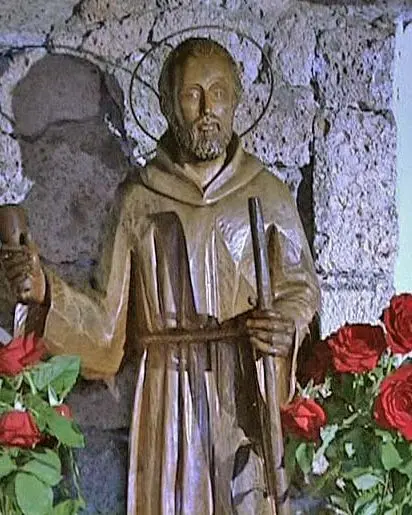
Saint Peter of Saint Joseph de Betancur
Poor Tenerife shepherd who became the “Apostle of Guatemala” and founded the Bethlehemites
- Rank
- Saint
- Kind
- Founder, Religious
- Life
- 1626 – 1667
- Era
- 17th century
- Feast
- 25 April
- Countries
- Spain, Guatemala
Life story
Pedro de Betancur was born on 21 March 1626 in Vilaflor on the island of Tenerife in the Canaries, into a poor farming family, and grew up working as a shepherd. In 1649, aged 23, he left the port of Santa Cruz de Tenerife for the New World, and reached Guatemala around 1650–51, in the city now known as Antigua Guatemala.
There he took whatever work he could find, briefly studied with the idea of becoming a priest but did not succeed, and then joined the Franciscan Third Order. In 1658 he turned a hut into a place of care for poor people who had recovered from illness and had nowhere to go. It grew into a hospital, with a shelter, a school, an oratory and a lodging for priests. Those who worked with him formed a group living under a rule drawn from Saint Augustine.
He died on 25 April 1667 in Antigua Guatemala at the age of 41. After his death his companions continued the work and developed into the Order of Our Lady of Bethlehem (the Bethlehemites), which spread across Central and South America. Pope John Paul II beatified him on 22 June 1980 and canonised him on 30 July 2002 in Guatemala City, the first canonisation held on Guatemalan soil. He is regarded as a patron of the Canary Islands and of Guatemala.
Works and witness
- Left Tenerife in 1649 and reached Guatemala around 1650–51
- In 1658 opened a place of care for poor convalescents
- Expanded it into a hospital, school and lodging house
- His work led to the Order of Our Lady of Bethlehem
- Canonised on 30 July 2002
Patron of
Canary Islands, Guatemala, The homeless
Saints from the same country
References
- Martyrologium Romanum (25 April)
- Dicastery for the Causes of Saints: biography and canonisation records, 30 July 2002
- Biographical sources of the Bethlehemite order
Written by Anawim from documented history. Some details about ancient saints rest on tradition and are marked as such.