

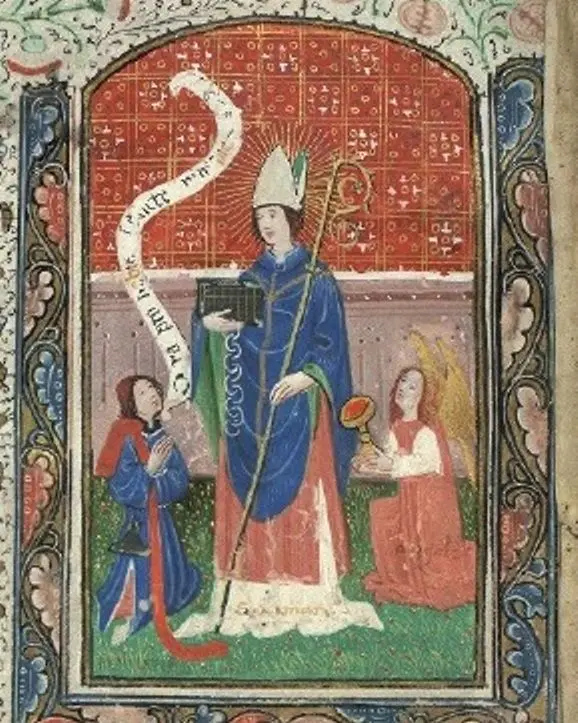
Saint Ninian
Missionary to the southern Picts linked with Whithorn, known from thin sources
- Rank
- Saint
- Kind
- Bishop, Missionary
- Feast
- 16 September
- Countries
- United Kingdom
Life story
The earliest mention of Ninian is in Bede, around 731. He writes that Ninian was a Briton trained in Rome, who built a stone church, named his see after Martin of Tours, converted the southern Picts and was buried at Whithorn. The place is linked with the Candida Casa (White House). Other main sources are the Miracula Nynie Episcopi (eighth century), recording miracles attributed to him, and Aelred of Rievaulx's Vita Sancti Niniani (around 1160), which adds details such as a meeting with Martin.
Scholars say that no source is fully reliable. The Miracula is not regarded as history, and the additions of James Ussher (1639) contain much legend. The traditional death date of 432 comes from Ussher and has been called without authority by one historian; the birth date is merely inferred from the link with Martin (died 397). His identity is also debated: in 1855 James Henthorn Todd proposed Finnian of Moville, and Thomas Owen Clancy has argued for a link with three saints named Finnian or Finbarr.
All that can be said with confidence is that a cult of a bishop Ninian existed at Whithorn from about the eighth century; his true date and career remain unclear. Dedications to him are concentrated in former Pictish areas, northern England and Ulster. His feast is 16 September.
Works and witness
- According to Bede, a Briton trained in Rome
- According to Bede, converted the southern Picts and built a stone church at Whithorn
- Subject of Aelred's Vita Niniani (c. 1160)
- Centre of veneration at Whithorn, Galloway
Saints from the same country
References
- Bede, Historia ecclesiastica gentis Anglorum, III.4
- Catholic Encyclopedia, "St. Ninian" (newadvent.org/cathen/11084a.htm)
- Britannica, "St. Ninian"
Written by Anawim from documented history. Some details about ancient saints rest on tradition and are marked as such.