

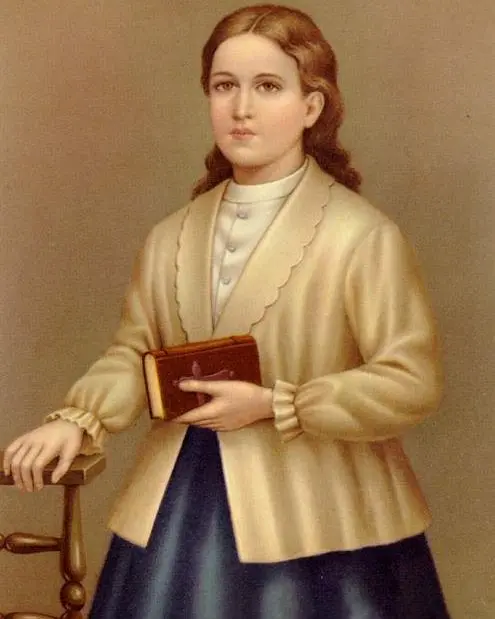
Saint Narcisa de Jesús
An Ecuadorian seamstress who lived a hidden life of prayer and penance in the city
- Rank
- Saint
- Kind
- Layperson, Virgin
- Life
- 1832 – 1869
- Era
- 19th century
- Feast
- 30 August
- Countries
- Ecuador, Peru
Life story
Narcisa Martillo Morán was born on 29 October 1832 in the village of San José, in Nobol, Guayas province, Ecuador, to a farming family. She lost her mother when she was small, and from her youth she was known for hard work at home, for prayer and for helping those around her.
After her father died in January 1852 she moved to Guayaquil. There she earned a living as a seamstress and embroiderer, and she helped the poor, the sick and abandoned children. She taught catechism to children and lived a life of prayer and penance in the manner of the Dominican Third Order. She later spent some months in Cuenca, staying in the homes of various families so as to have more time for prayer.
In June 1868 she went to Lima, Peru, and lived near the Dominican church of the Patrocinio. There she lived simply, continuing her work and prayer until she fell ill. She died in Lima on 8 December 1869, at about the age of thirty-seven.
John Paul II beatified her on 25 October 1992, and Benedict XVI canonised her on 12 October 2008. She is among the few Ecuadorian women honoured by the Church. Details of her inner life rest mostly on the accounts of her contemporaries. Her memory is kept alive especially in Nobol, her birthplace, and in Guayaquil and Lima, the cities in which she lived and worked. Her feast falls on 30 August.
Works and witness
- Worked as a seamstress in Guayaquil from 1852
- Helped the poor, the sick and abandoned children
- Lived a life of prayer and penance in the Dominican Third Order
- Went to Lima in June 1868 and died there in 1869
- Beatified in 1992, canonised in 2008
Saints from the same country
References
- Martyrologium Romanum
- Dicastery for the Causes of Saints – biographical profile
- Acta Apostolicae Sedis
Written by Anawim from documented history. Some details about ancient saints rest on tradition and are marked as such.