

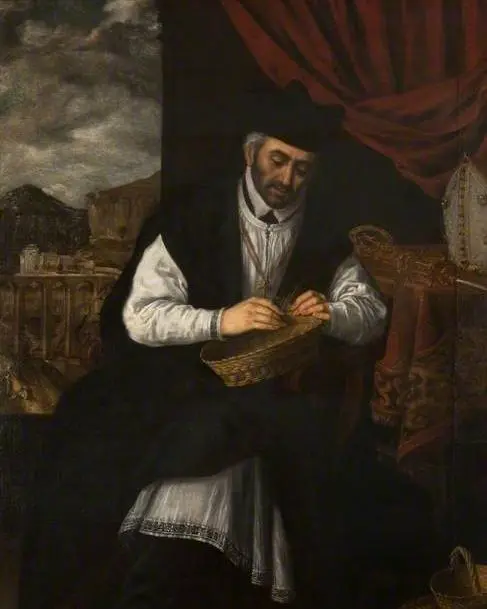
Saint Julian of Cuenca
Bishop of Cuenca who wove baskets to help the poor
- Rank
- Saint
- Kind
- Bishop
- Life
- 1127 – 1208
- Era
- 13th century
- Feast
- 28 January
- Countries
- Spain
Life story
Julian (Julián) was born around 1127 in Burgos, in the Kingdom of Castile. He studied at the cathedral school in Burgos and then at the University of Palencia. From 1153 until about 1163 he taught philosophy and theology at Palencia.
In 1163 he left Palencia to live in a modest house outside Burgos, and he was ordained a priest in 1166. He wove baskets to earn money and gave most of it to the poor, a habit he kept in Toledo and even as a bishop. In 1191 the archbishop of Toledo made him archdeacon.
In 1196 the king chose him to succeed Bishop Juan Yáñez at Cuenca, and he was consecrated in June of that year. He visited prisoners, gave grain to the poor and to farmers, and supported charities that aided Jews and Muslims as well as Christians. Though a bishop, he never lost his desire for solitude and retreated each year into silence.
He died in Cuenca in 1208, on 28 January according to most sources (20 January in Cuenca's old obituaries), and was buried in the cathedral. In 1578 his relics were placed under an altar made in his honour. Pope Clement VIII canonised him on 18 October 1594. By tradition he is the patron of basket-makers.
Works and witness
- Taught philosophy and theology at Palencia from 1153
- Wove baskets to raise money for the poor, even as bishop
- Archdeacon of Toledo in 1191 and bishop of Cuenca from 1196
- Visited prisoners, gave grain to the poor and supported charity without regard to religion
- Canonised on 18 October 1594
Patron of
Basket-makers (by tradition), City and diocese of Cuenca
Saints from the same country
References
- Real Academia de la Historia, 'San Julián de Cuenca', dbe.rah.es/biografias/11411/san-julian-de-cuenca
- Wikipedia: 'Julian of Cuenca' (patronage; Cuenca obituaries give 20 January)
- Catholic-Hierarchy.org, 'Bishop St. Julián', catholic-hierarchy.org/bishop/bjulin.html
Written by Anawim from documented history. Some details about ancient saints rest on tradition and are marked as such.