

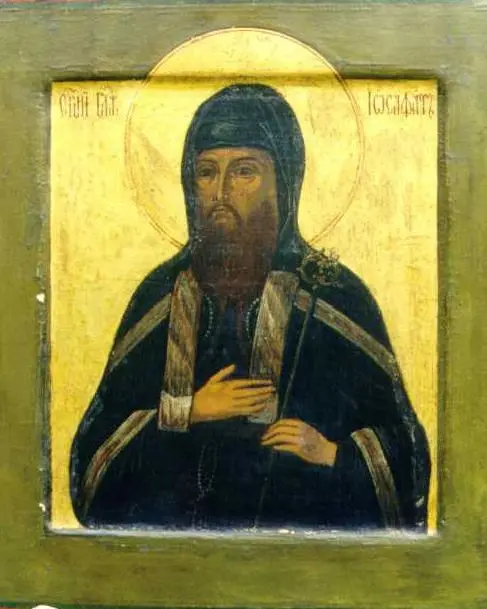
Saint Josaphat Kuntsevych
Archbishop of Polotsk killed by a mob at Vitebsk over union with Rome
- Rank
- Saint
- Kind
- Bishop, Martyr
- Life
- 1580 – 1623
- Era
- 17th century
- Feast
- 12 November
- Countries
- Ukraine, Belarus, Lithuania
Life story
Josaphat was born around 1580 at Volodymyr in Volhynia, now in Ukraine, into a townsman's family of the Orthodox Church of Ruthenia, and was baptised Ivan. He trained as a merchant in Vilnius. The Union of Brest in 1596 had brought most of the Ruthenian Church into communion with Rome while keeping Eastern rites, and he grew up amid the controversy that followed.
In 1604 he entered the Holy Trinity monastery in Vilnius and took the name Josaphat. With Veliamin Rutsky, later metropolitan of Kyiv, he helped renew monastic life in the Basilian order. He was ordained a priest, became an abbot, and in 1618 was appointed archbishop of Polotsk in the Ruthenian Catholic Church united with Rome.
He reformed the diocese, worked to improve the clergy's way of life, taught, and visited parishes, and he also preached and celebrated the liturgy in the Eastern rite. He defended the union firmly, and met fierce opposition from many Orthodox groups who rejected the Union of Brest. Tension grew, and his opponents denounced him to the people.
On 12 November 1623, during a visit to Vitebsk, he was attacked and killed by a mob, and his body was thrown into the Dvina river. He was beatified in 1643. Pope Pius IX canonised him in 1867. His relics now rest in St Peter's Basilica in Rome.
Works and witness
- Born around 1580 at Volodymyr; trained as a merchant in Vilnius
- Entered the Holy Trinity monastery in Vilnius in 1604
- Helped renew the Basilian order with Veliamin Rutsky
- Archbishop of Polotsk from 1618, supporter of the Union of Brest
- Killed at Vitebsk on 12 November 1623; canonised in 1867
Saints from the same country
References
- Martyrologium Romanum
- Dicastery for the Causes of Saints – biographical profile
- Union of Brest (1596) documents
Written by Anawim from documented history. Some details about ancient saints rest on tradition and are marked as such.