

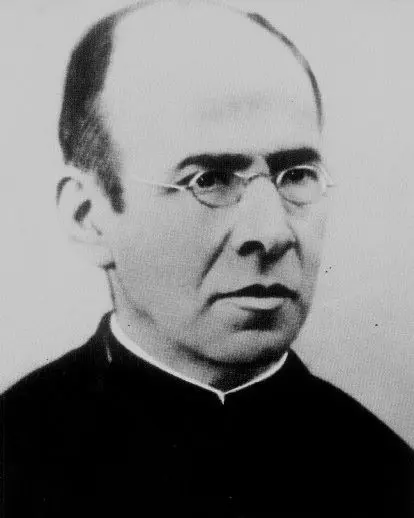
Saint Faustino Míguez
Galician Piarist teacher, plant researcher and founder of a sisterhood for girls' education
- Rank
- Saint
- Kind
- Priest, Founder
- Life
- 1831 – 1925
- Era
- 20th century
- Feast
- 8 March
- Countries
- Spain
Life story
Manuel Míguez González was born on 24 March 1831 at Xamirás in the province of Ourense, Galicia. In December 1850 he entered the Piarist novitiate in Madrid, taking the name Faustino of the Incarnation, made solemn profession on 16 January 1853 and was ordained priest on 8 March 1856. He was sent to Cuba, where he developed an interest in botany and the healing properties of plants.
In 1860 he returned to the Peninsula and taught in San Fernando, Getafe, Celanova and Sanlúcar de Barrameda. He studied the healing properties of plants and prepared medicines for the sick. At Sanlúcar de Barrameda he encountered poor, illiterate women, and on 2 January 1885 he founded the Calasanzian Institute of the Daughters of the Divine Shepherdess to educate girls.
He died in Getafe on 8 March 1925, aged 93. He was beatified by John Paul II on 25 October 1998 and canonised by Pope Francis on 15 October 2017. His feast day is 8 March, the day of his death.
Works and witness
- Entered the Piarists in 1850 and was ordained in 1856
- Taught in Cuba and in several Piarist colleges in Spain
- Studied medicinal plants and prepared remedies for the sick
- Founded the Calasanzian Institute of the Daughters of the Divine Shepherdess on 2 January 1885
- Beatified in 1998 and canonised in 2017
Saints from the same country
References
- Vatican: 'Faustino Míguez', homily/biography of the beatification of 25 Oct 1998, vatican.va/news_services/liturgy/saints/ns_lit_doc_19981025_faustino-miguez_po.html
- Instituto Calasancio Hijas de la Divina Pastora: circulars (founding on 2 January 1885 at Sanlúcar de Barrameda; first feast on 8 March 2018), institutocalasancio.es
- Catholic.net (Spanish): 'San Faustino Míguez' (beatification and canonisation dates, 1860 return to Spain)
Written by Anawim from documented history. Some details about ancient saints rest on tradition and are marked as such.