

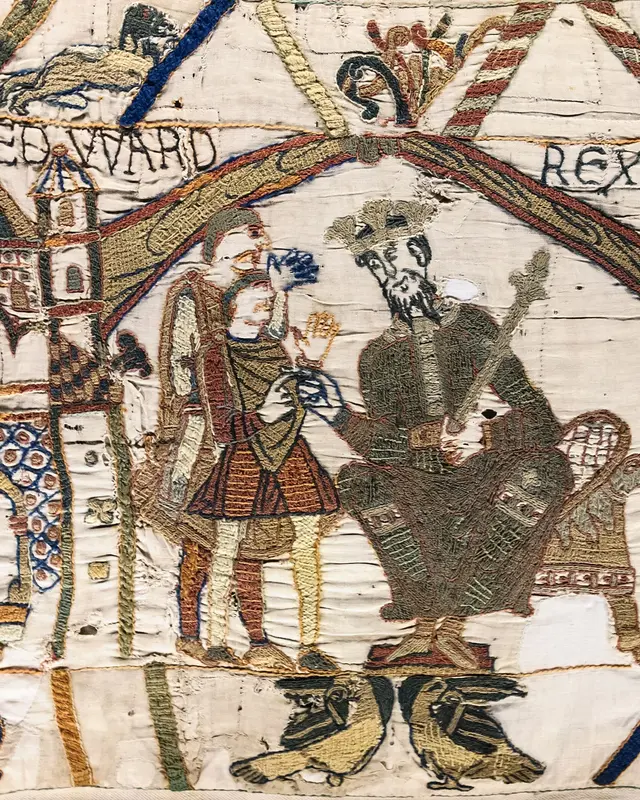
Saint Edward the Confessor
The last king of the House of Wessex and builder of Westminster Abbey
- Rank
- Saint
- Kind
- Royalty
- Life
- 1003 – 1066
- Era
- 11th century
- Feast
- 13 October
- Countries
- United Kingdom
Life story
Edward was born around 1003 at Islip in Oxfordshire, a son of King Æthelred and Emma of Normandy. When the Danes took England he lived in exile for about twenty-five years, mostly in Normandy. In 1041 he returned at the invitation of his half-brother Harthacnut, and after Harthacnut's death he was acclaimed king in 1042 and crowned at Winchester on 3 April 1043.
His reign was a fairly peaceful time for England. In 1045 he married Edith, daughter of Earl Godwin, but the marriage produced no children. He quarrelled with the Godwin family in 1051 and 1052 and in the end had to accept their return. He was also reported to be devout, and rebuilding Westminster Abbey was the great project of his reign. The church was consecrated on 28 December 1065, but he was too ill to attend.
Edward died on 5 January 1066 and was buried at Westminster the next day. Who he meant to succeed him is still debated by historians. Harold Godwinson took the throne and died at Hastings later that year, and William of Normandy became king. Pope Alexander III canonised him on 7 February 1161. The Church keeps his feast on 13 October, the date of the translation of his body in 1163. Later writers stressed his piety, but historians also point out that he governed firmly and abolished the heregeld, a tax used to pay for the fleet, in 1051. He relied on Norman and English advisers alike.
Works and witness
- Lived in exile in Normandy for about twenty-five years
- King of England from 1042 to 1066
- Rebuilt Westminster Abbey, consecrated in late 1065
- Died on 5 January 1066 with no heir
- Canonised by Pope Alexander III in 1161
Saints from the same country
References
- Martyrologium Romanum
- Anglo-Saxon Chronicle
- Vita Ædwardi Regis
Written by Anawim from documented history. Some details about ancient saints rest on tradition and are marked as such.