

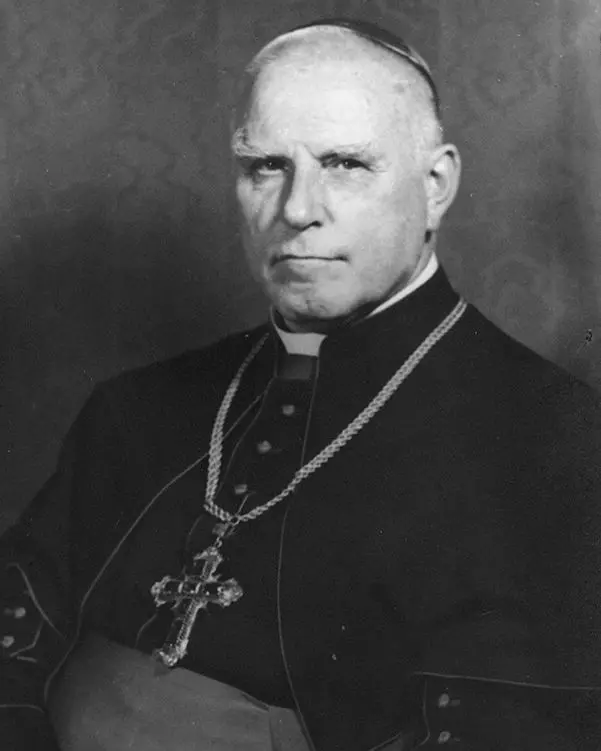
Blessed Clemens August von Galen
The “Lion of Münster”, the bishop who denounced Nazi euthanasia
- Rank
- Blessed
- Kind
- Bishop
- Life
- 1878 – 1946
- Era
- 20th century
- Feast
- 22 March
- Countries
- Germany
Life story
Clemens August Graf von Galen was born on 16 March 1878 at Dinklage Castle in Oldenburg, into a Catholic noble family of Westphalia. He was ordained a priest in 1904, served for years in Berlin and then as parish priest of Saint Lambert's in Münster. On 5 September 1933 he was appointed bishop of Münster and was consecrated on 28 October that year.
In the first years of Nazi rule he was cautious but steadily defended the rights of the Church and objected to the regime's measures against religious life. In July and August 1941 he delivered three well-known sermons. He denounced the lawless acts of the Gestapo, such as the seizure of monastic houses, and above all the programme of killing mentally ill and disabled people, known as Aktion T4. In his sermon of 3 August he called these acts murder.
The sermons were copied and circulated widely in Germany and abroad, earning him the nickname Lion of Münster. The Nazi authorities did not dare to try him openly, though several people close to him were arrested. After the war he continued to speak for those who suffered and for reconstruction in justice.
In February 1946 Pius XII made him a cardinal. He died on 22 March 1946 in Münster, aged sixty-eight, only weeks after returning from Rome. Benedict XVI beatified him on 9 October 2005. His feast is on 22 March.
Works and witness
- Ordained in 1904; parish priest of Saint Lambert's in Münster
- Bishop of Münster from 1933 until his death
- Preached three sermons against the Gestapo and Aktion T4 in summer 1941
- Created cardinal in February 1946
- Beatified on 9 October 2005
Saints from the same country
References
- Martyrologium Romanum
- Dicastery for the Causes of Saints – biographical profile
- Diocese of Münster – materials on Cardinal von Galen
Written by Anawim from documented history. Some details about ancient saints rest on tradition and are marked as such.