

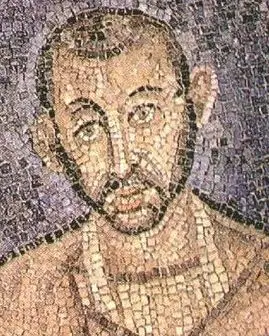
Saint Ambrose
A governor made bishop of Milan by the acclaim of its people
- Rank
- Saint
- Kind
- Bishop, Doctor of the Church
- Life
- ~340 – ~397
- Era
- 4th century
- Feast
- 7 December
- Countries
- Germany, Italy
Life story
Ambrose was born around 340 at Trier into a Christian Roman family; his father was praetorian prefect of Gaul. After his father's death he was taken to Rome, studied law and rhetoric, and entered public service. Around 370 he was appointed governor of Aemilia-Liguria, based in Milan.
In 374 the bishop of Milan died, and the city was divided between Arians and Nicenes. Ambrose came to keep order, and according to early accounts the people cried out for him as bishop even though he had not been baptised. He was baptised and ordained within about a week, then gave most of his wealth to the poor.
As bishop he expounded Scripture, composed Latin hymns, and wrote works such as On the Duties of the Clergy. He resisted efforts by the court to favour the Arians. In 390, after soldiers massacred the people of Thessalonica, he required the emperor Theodosius to do public penance before receiving communion.
He also baptised Augustine in 387. He died on 4 April 397. His feast on 7 December marks his ordination as bishop; he is one of the first four Latin Doctors of the Church, named in 1295. Ambrose also preached against excessive wealth and for the care of the poor. In 386 he refused the court's demand to hand over a church in Milan to the Arians, an episode that tested the limits of imperial authority. He was buried in the church later named for him, Sant'Ambrogio, where his remains are still venerated.
Works and witness
- Elected bishop of Milan in 374 while still a catechumen
- Composed Latin hymns and wrote On the Duties of the Clergy
- In 390, required Emperor Theodosius to do public penance after Thessalonica
- Baptised Augustine in 387
Patron of
City of Milan, Beekeepers
Saints from the same country
References
- Paulinus of Milan, Life of Ambrose
- Ambrose, De officiis
- Martyrologium Romanum
Written by Anawim from documented history. Some details about ancient saints rest on tradition and are marked as such.