

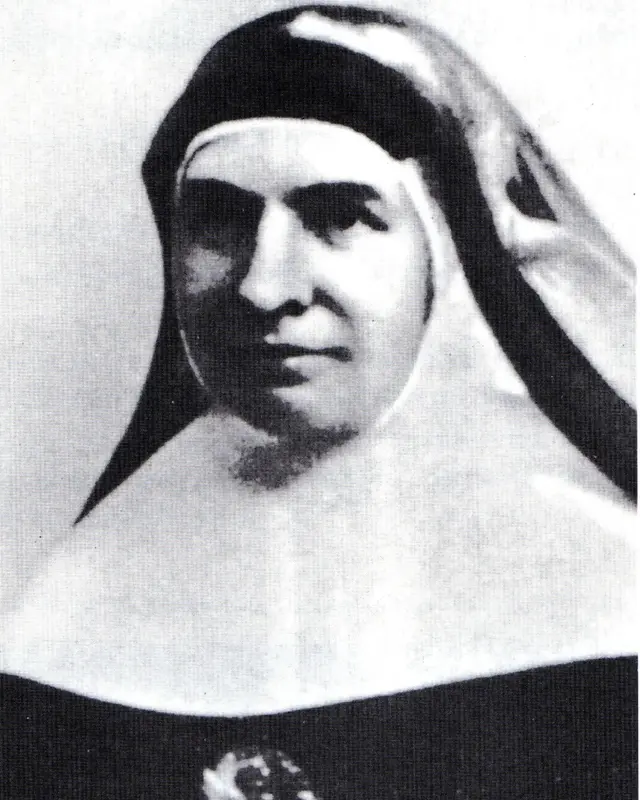
Saint Candida Maria of Jesus
A Basque domestic servant who became founder of the Daughters of Jesus
- Rank
- Saint
- Kind
- Founder, Religious
- Life
- 1845 – 1912
- Era
- 20th century
- Feast
- 9 August
- Countries
- Spain
Life story
Juana Josefa Cipitria y Barriola was born on 31 May 1845 in the hamlet of Berrospe, in Andoain, Gipuzkoa, Spain. She was the eldest child of a large family of weavers. Because she had to look after her younger siblings, she did not attend school in the usual way.
As a young woman she went to Burgos and worked as a domestic servant. In the late 1860s, in Valladolid, she met the Jesuit priest Miguel José Herranz, who guided her charitable and educational work. It was there that she sensed a call to found a new congregation.
The Daughters of Jesus was established in Salamanca on 8 December 1871 with a few companions, with the aim of educating and supporting women, especially poor girls. The bishop of Salamanca gave diocesan approval on 3 April 1873. Her motto was “I am for God alone.”
She died in Salamanca on 9 August 1912, aged 67. John Paul II beatified her on 12 May 1996, and Benedict XVI canonised her on 17 October 2010 in St Peter's Square. Her feast day is 9 August.
Works and witness
- Worked as a domestic servant in Burgos
- Was guided in her charitable work by the Jesuit Miguel José Herranz
- Founded the Daughters of Jesus in Salamanca on 8 December 1871
- The congregation received diocesan approval from the bishop of Salamanca on 3 April 1873
- Beatified in 1996 and canonised on 17 October 2010
Saints from the same country
References
- Vatican, John Paul II, address at the beatification of 12 May 1996, vatican.va/content/john-paul-ii/es/speeches/1996/may/documents/hf_jp-ii_spe_19960513_beatif-candida.pdf
- ACI Prensa: 'Benedicto XVI canonizará... Candida María de Jesús' (birth at Andoain, foundation on 8 December 1871)
- Wikipedia: 'Candida Maria of Jesus' (Burgos, Valladolid 1868, diocesan approval 3 April 1873)
Written by Anawim from documented history. Some details about ancient saints rest on tradition and are marked as such.