

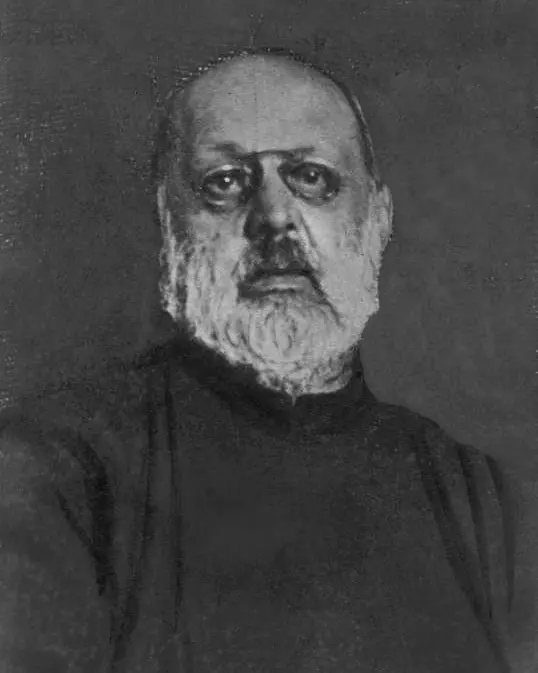
Saint Albert Chmielowski
A painter who lost a leg in an uprising and became a brother to the homeless
- Rank
- Saint
- Kind
- Religious, Founder
- Life
- 1845 – 1916
- Era
- 20th century
- Feast
- 17 June
- Countries
- Poland
Life story
Adam Chmielowski was born on 20 August 1845 at Igołomia near Kraków. His father died early and his mother when he was still young, so relatives raised him. In 1863, at seventeen, he joined the January Uprising against Russian rule. He was wounded in battle and one leg was amputated; from then on he walked with a prosthesis for the rest of his life.
After a period in exile he studied painting in France, Belgium and Germany, then returned to Poland as an artist, mixing with the artistic circles of Warsaw and Kraków. One of his best-known works is the painting Ecce Homo, from around 1879–1880. He gradually left painting, and in the 1880s he began spending time among the homeless in the shelters of Kraków. In 1887 he took the Franciscan Third Order habit and the name Albert.
From 1888 he opened shelters for the poor, and two communities grew around him: the Albertine Brothers and, later, a women's congregation, the Albertine Sisters. He died in Kraków on 25 December 1916. He was beatified in 1983 and canonised by Pope John Paul II on 12 November 1989. He was also the inspiration for Karol Wojtyła's play Our God's Brother.
In his later years the Albertine brothers and sisters opened more shelters in several Polish cities. He kept to a very simple way of life, wearing a grey habit and sharing plain meals with those he served. The Albertine communities still care for the homeless and the poor in Poland today.
Works and witness
- Lost a leg in the January Uprising of 1863 at age seventeen
- Studied painting abroad and painted Ecce Homo
- Lived among Kraków's homeless; took the habit in 1887
- Founded the Albertine Brothers and Sisters; canonised in 1989
Saints from the same country
References
- Martyrologium Romanum
- Dicastery for the Causes of Saints – biographical profile
- Karol Wojtyła, Brat naszego Boga (play)
Written by Anawim from documented history. Some details about ancient saints rest on tradition and are marked as such.